
Last updated: June 24, 2026
Quick Answer: Finding land for a tiny house in Texas means identifying counties with permissive or no zoning, understanding whether your tiny home is classified as a THOW (tiny house on wheels) or a permanent structure, and searching rural land listings in areas like West Texas, the Hill Country, or East Texas. The process is more achievable than most people expect — but the details matter, and they vary county by county.
Key Takeaways
- Texas has no statewide tiny home zoning law, so rules are set county by county and city by city
- "Unrestricted" counties like Bastrop, Fayette, and parts of West Texas offer the most flexibility for tiny home placement
- A THOW (tiny house on wheels) is treated as an RV in most Texas counties, which changes where you can legally park it
- Buying raw land in rural Texas can cost as little as $2,000–$10,000 per acre in some regions (estimates based on rural land market data from the Texas Real Estate Research Center, 2023)
- Always check for deed restrictions, HOA rules, and mineral rights before closing on any Texas land purchase
- Land lease options through tiny home communities are a lower-cost entry point worth exploring
- Working with a builder who knows Texas land requirements can save you significant time and money
Table of Contents
- Why Texas Is a Realistic Option for Tiny Home Land
- How Texas Zoning Actually Works (and Where It Doesn't)
- The Best Regions in Texas to Search for Tiny Home Land
- How to Find Land for a Tiny House in Texas: Step-by-Step
- THOW vs. Permanent Structure: Why the Distinction Changes Everything
- What to Watch Out For Before You Buy
- Land Lease and Tiny Home Community Options
- Working With Builders Who Know Texas Land
- FAQ
Why Texas Is a Realistic Option for Tiny Home Land
Texas is one of the more practical states for tiny home land searches, largely because of its sheer size and strong tradition of property rights. Millions of acres of rural land sit outside incorporated city limits, where county zoning — if it exists at all — is often minimal.
That said, "Texas is easy" is an oversimplification that gets people into trouble. The state's 254 counties each set their own rules, and what's allowed in Terrell County may be completely off-limits in Travis County. Knowing how to find land for a tiny house in Texas starts with understanding that distinction.
How Texas Zoning Actually Works (and Where It Doesn't)
Most rural Texas counties have little to no zoning. This is genuinely good news for tiny home buyers — but it doesn't mean anything goes.
Here's what actually governs land use in unincorporated Texas:
- County regulations: Some counties have adopted floodplain rules, septic requirements (through TCEQ, the Texas Commission on Environmental Quality), and minimum square footage requirements for permanent dwellings
- Deed restrictions: Private deed restrictions can be far more limiting than county rules, and they run with the land regardless of who owns it
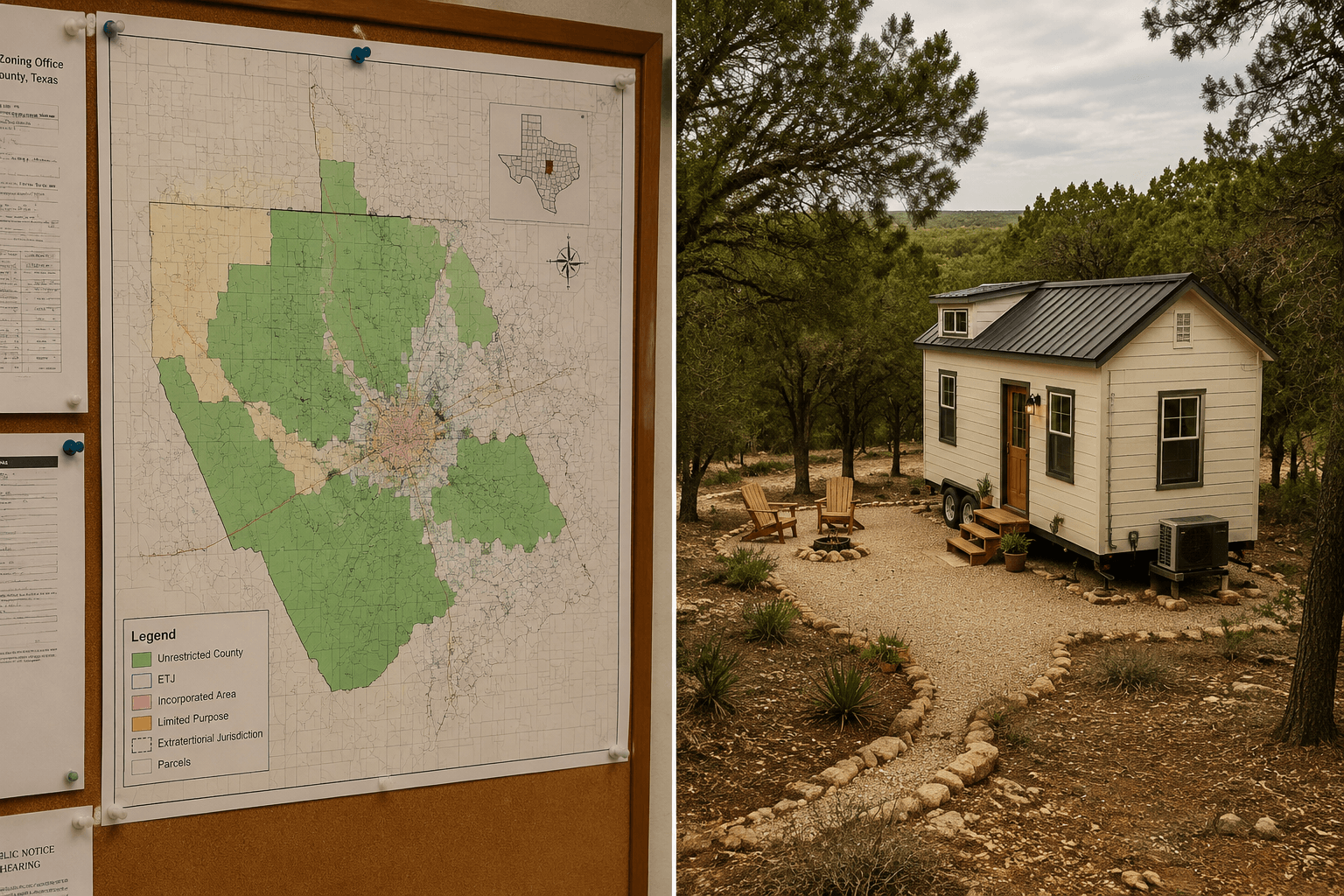
- City ETJ (Extra-Territorial Jurisdiction): Land just outside city limits may still fall under a city's planning authority — sometimes extending 5 miles out
- HOA rules: Subdivision developments often have covenants that prohibit tiny homes, non-traditional structures, or THOWs entirely
Unrestricted counties to research first: Bastrop, Fayette, Lee, Gonzales, and many counties in West Texas and the Panhandle tend to have fewer restrictions on rural land use. Always verify directly with the county judge's office or county clerk — zoning maps online are often outdated.
The Best Regions in Texas to Search for Tiny Home Land
Different parts of Texas offer very different tradeoffs. Here's a quick regional breakdown:
| Region | Land Cost (est.) | Climate | Notes |
|---|---|---|---|
| West Texas (Big Bend area) | Low ($1,500–$5,000/acre) | Hot, arid | Very few restrictions; off-grid common |
| Hill Country (Kerrville, Fredericksburg) | Moderate–High | Mild, scenic | Popular but pricier; check deed restrictions |
| East Texas (Piney Woods) | Low–Moderate | Humid, wooded | Some county restrictions; septic required |
| Gulf Coast (inland rural) | Moderate | Humid, flood risk | Flood zone research is essential |
| Panhandle/North Texas | Low | Hot summers, cold winters | Wide open; minimal zoning in rural areas |
The Hill Country draws a lot of interest because of its scenery and proximity to Austin and San Antonio. But that popularity has pushed land prices up and tightened some local rules. West Texas offers more freedom and lower prices if distance from urban centers isn't a dealbreaker for you.
How to Find Land for a Tiny House in Texas: Step-by-Step
Knowing how to find land for a tiny house in Texas is really a research and verification process. Here's a practical sequence:
- Decide on your tiny home type first. Is it a THOW (on wheels) or a permanent foundation structure? This determines which rules apply.
- Identify target counties. Start with counties known for minimal zoning. Cross-reference with your preferred region.
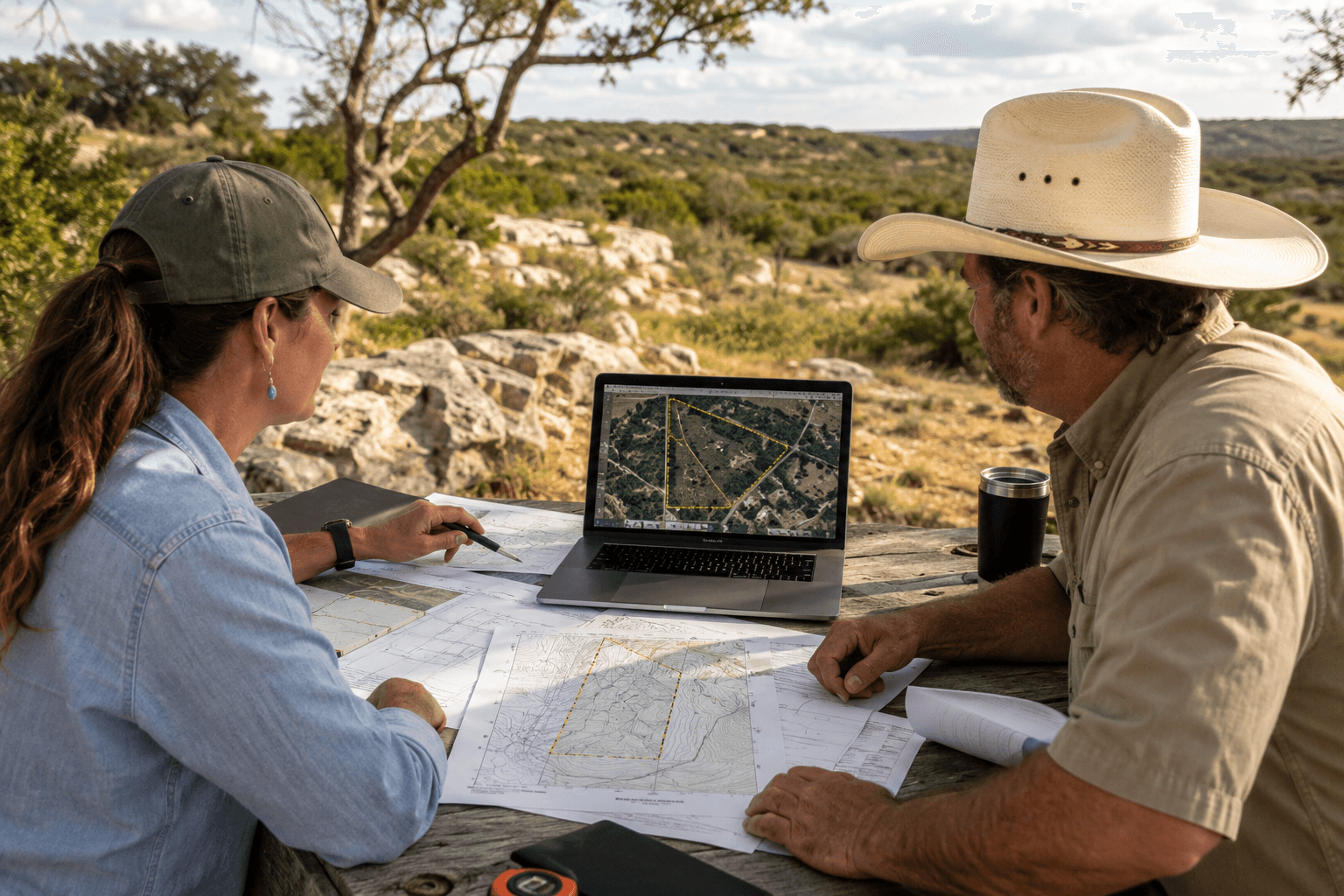
- Call the county directly. Contact the county judge's office or county development office. Ask specifically: "Are there minimum square footage requirements for dwellings? Are THOWs allowed as permanent residences?"
- Search land listing platforms. LandWatch, Lands of Texas, and Land And Farm all have strong Texas inventories. Filter by county, acreage, and price.
- Hire a local real estate attorney. Before closing, have someone review deed restrictions and the title report. This step is non-negotiable.
- Check TCEQ septic requirements. Any permanent structure needs an approved septic system. Soil type and lot size affect what's allowed.
- Investigate mineral rights. In Texas, mineral rights are often severed from surface rights. Know what you're buying.
THOW vs. Permanent Structure: Why the Distinction Changes Everything
A THOW — a tiny house built on a trailer chassis — is legally classified as an RV in most Texas counties. That's both a benefit and a limitation.
If your tiny home is a THOW:
- You may be able to park it on rural land without a building permit
- Many counties prohibit using a THOW as a permanent primary residence
- RV parks and tiny home communities may be your most straightforward option
- RVIA certification (certification from the Recreation Vehicle Industry Association) can help with financing and park acceptance
If your tiny home is a permanent structure:
- It must meet the International Residential Code (IRC) or local building code
- You'll need a building permit, inspections, and an approved foundation
- Minimum square footage rules (often 400–600 sq ft in counties that have them) may apply
- Financing is generally easier through traditional mortgage products
Choosing between these two paths early will save you from researching the wrong set of rules. For a broader look at how these distinctions play out across different states, the complete state-by-state guide at Tiny Home Sherpa is a useful reference.
What to Watch Out For Before You Buy
A few issues catch Texas tiny home buyers off guard more than others:
Mineral rights: Texas has a long history of severing mineral rights from surface rights. If you buy land where someone else owns the minerals, they may have legal access to drill or excavate. Ask for a title search that specifically addresses mineral ownership.
Deed restrictions: These are private agreements that stay attached to the land. A county with no zoning can still have a subdivision with strict deed restrictions banning tiny homes, manufactured homes, or any structure under a certain square footage.
Flood zones: Parts of East Texas and the Gulf Coast carry significant flood risk. Check FEMA flood maps before you fall in love with a parcel.
Water access: Rural land may not have municipal water. Well drilling costs in Texas vary widely by location — budget $5,000–$25,000 as a rough estimate depending on depth and geology.
Road access: Some rural parcels are landlocked or accessed by easements that aren't clearly documented. Confirm legal road access in writing.
Land Lease and Tiny Home Community Options
Buying land outright isn't the only path. Land leases and tiny home communities offer a lower-cost entry point — and in some cases, a ready-made community.
Texas has a growing number of tiny home communities and RV parks that welcome THOWs on a lease basis. Monthly lot rents typically run $300–$700 depending on location and amenities. Some communities offer rent-to-own arrangements on the land itself.
This option makes sense if you:
- Want to try tiny living before committing to a land purchase
- Prefer hookups (water, electric, sewer) already in place
- Value community and shared amenities
- Are working with a tighter upfront budget
The tradeoff is that you don't build equity in the land, and community rules can be restrictive. Read any lease carefully before signing.
If you're also exploring how neighboring states handle this, the Arkansas tiny home guide and Alabama tiny home guide offer useful comparisons on land and zoning approaches.
Working With Builders Who Know Texas Land
One underused resource when figuring out how to find land for a tiny house in Texas: builders who operate in the state and have navigated its land quirks before.
Experienced Texas tiny home builders often know which counties are buyer-friendly, which regions have the best land values, and which pitfalls to avoid. Some offer land consultation as part of their process. That local knowledge is worth asking about directly when you're vetting builders.
A few builders worth looking at through the Tiny Home Sherpa directory:
- Tiny House Building Company — experienced in custom builds with regional expertise
- Homestead Tiny House Co. — focused on permanent foundation builds suited to rural land
- Tumbleweed Tiny House Company — one of the most established names in the THOW space
- Free Range Tiny Homes — known for off-grid-capable builds that suit rural Texas conditions
When you talk to any builder, ask directly: "Do you have experience with Texas county regulations? Can you recommend land consultants or real estate agents who specialize in tiny home parcels?"
For off-grid-capable builds specifically suited to rural Texas land, the off-grid ready builder listings on Tiny Home Sherpa are a practical starting point.
Conclusion
Finding land for a tiny house in Texas is genuinely doable — but it rewards people who do their homework before they fall in love with a parcel. Start with your home type (THOW or permanent structure), narrow your region based on lifestyle and budget, and call county offices directly rather than relying on online zoning maps that may be years out of date.
Your next steps:
- Identify two or three target counties and call their offices this week
- Search LandWatch or Lands of Texas filtered by those counties
- Connect with a Texas-based tiny home builder who can speak to local land conditions
- Hire a real estate attorney before you sign anything
Small footprint. Full life. The land is out there — you just need a clear path to find it. Start where you are, and take the next concrete step.
FAQ
Can I put a tiny house on any rural land in Texas? Not automatically. Even in counties with no zoning, deed restrictions, septic requirements, and minimum dwelling size rules may apply. Always verify with the county and review the title before purchasing.
What Texas counties are most tiny-home-friendly? Bastrop, Fayette, Lee, and many West Texas counties are frequently cited for minimal restrictions on rural land use. Conditions change, so confirm directly with each county's office.
Do I need a permit to place a THOW on rural Texas land? In many unincorporated areas, no building permit is required for a THOW. However, you may still need a septic permit and must comply with any deed restrictions. Some counties prohibit THOWs as permanent residences.
What are mineral rights, and why do they matter in Texas? In Texas, mineral rights (the right to extract oil, gas, or other minerals) are often owned separately from surface rights. If you buy land without mineral rights, the mineral owner may legally access your property. Always ask for a mineral rights title search.
How much does rural land cost in Texas for a tiny home? Prices vary widely. West Texas and the Panhandle can run $1,500–$5,000 per acre in rural areas. Hill Country land near popular towns can exceed $20,000 per acre. These are estimates based on Texas Real Estate Research Center market data (2023) and actual prices shift with market conditions.
Can I live full-time in a tiny home community in Texas? Yes, many Texas tiny home and RV communities allow full-time residency. Rules vary by community, so read the lease carefully and confirm the community's stance on permanent residents before committing.
Is owner financing available for Texas land purchases? Yes, owner financing is relatively common for rural Texas land, especially smaller parcels. It can be a useful option if traditional lenders won't finance raw land. Terms vary significantly, so have an attorney review any seller-financed deal.
References
- Texas Real Estate Research Center, Texas A&M University. Texas Rural Land Markets. 2023. https://trerc.tamu.edu/
- Texas Commission on Environmental Quality (TCEQ). On-Site Sewage Facilities. https://www.tceq.texas.gov/permitting/ossf
- FEMA National Flood Insurance Program. Flood Map Service Center. https://msc.fema.gov/