
Last updated: June 24, 2026
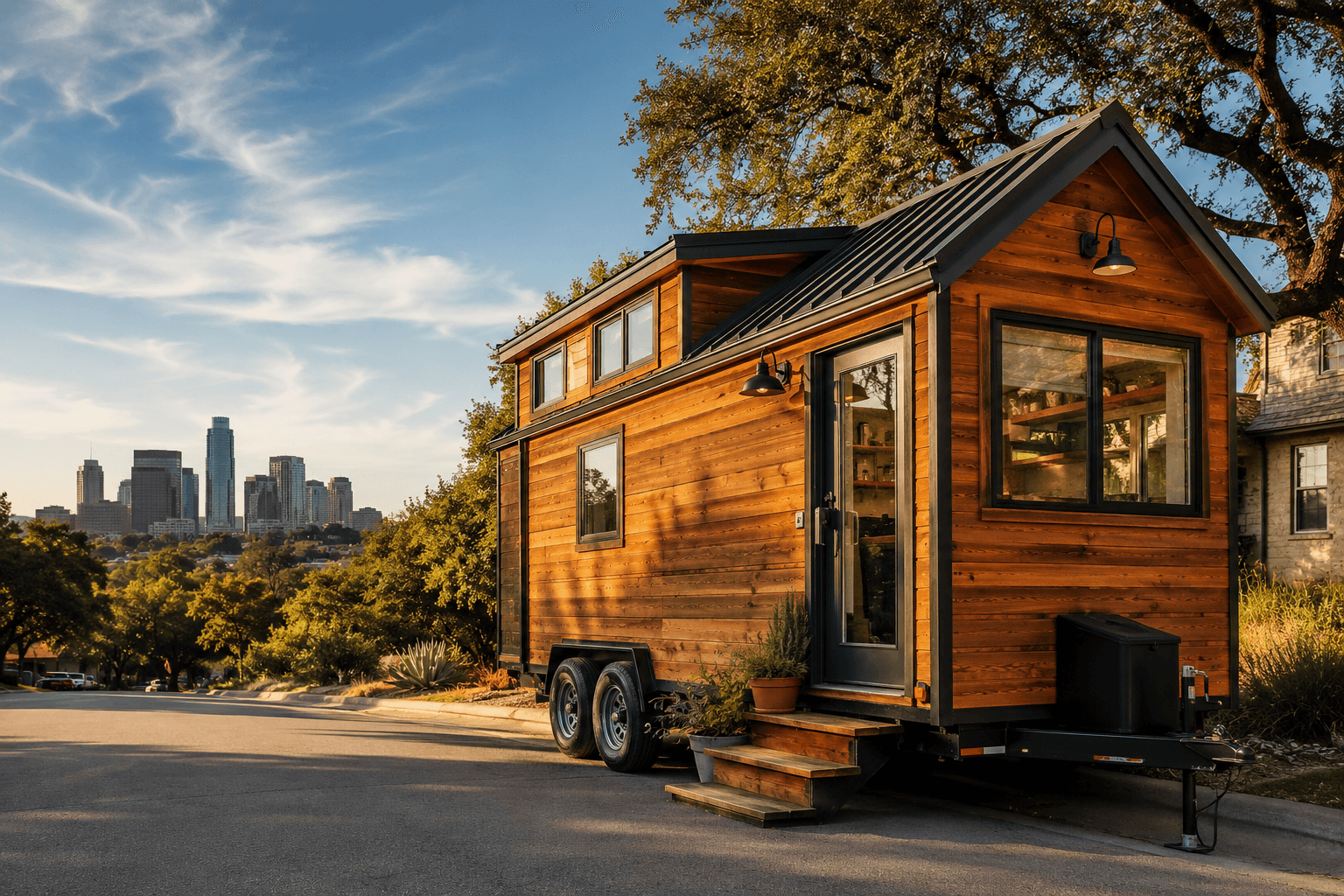
Quick Answer: Tiny house parking in Austin Texas depends almost entirely on what type of tiny home you have. Tiny houses on wheels (THOWs) are classified as RVs under Austin city code, which means full-time parking for living purposes is heavily restricted. Foundation-based tiny homes, on the other hand, can be legally placed as permanent dwelling units on residential lots, especially under Austin's HOME ordinance, which now allows up to three units on a single lot.
Key Takeaways
- Austin classifies THOWs as recreational vehicles, not dwelling units, which limits where you can legally live in one full-time
- Foundation-based tiny homes under 1,000 square feet can qualify as legal dwelling units in most Austin residential zones
- Austin's HOME (Home Options for Middle-income Empowerment) ordinance allows up to three housing units per residential lot, opening real doors for tiny home placement
- Long-term THOW living is generally only legal in licensed RV parks or campgrounds within Austin city limits
- Travis County areas outside Austin city limits have more flexible rules and are worth exploring
- Tiny home communities in the greater Austin metro area offer a legal, community-oriented path for THOW dwellers
- Always verify current rules directly with Austin Development Services Department before purchasing land or a tiny home
- Working with a builder familiar with Austin regulations saves significant time and money
Table of Contents
- How Austin Defines a Tiny Home
- Tiny House Parking in Austin Texas: THOWs vs. Foundation Homes
- What Austin's HOME Ordinance Means for Tiny Home Placement
- Where Can You Legally Park a THOW in Austin?
- Travis County vs. Austin City Limits: What Changes
- Tiny Home Communities Near Austin
- Permits and the Application Process
- Common Mistakes to Avoid
- FAQ
How Austin Defines a Tiny Home
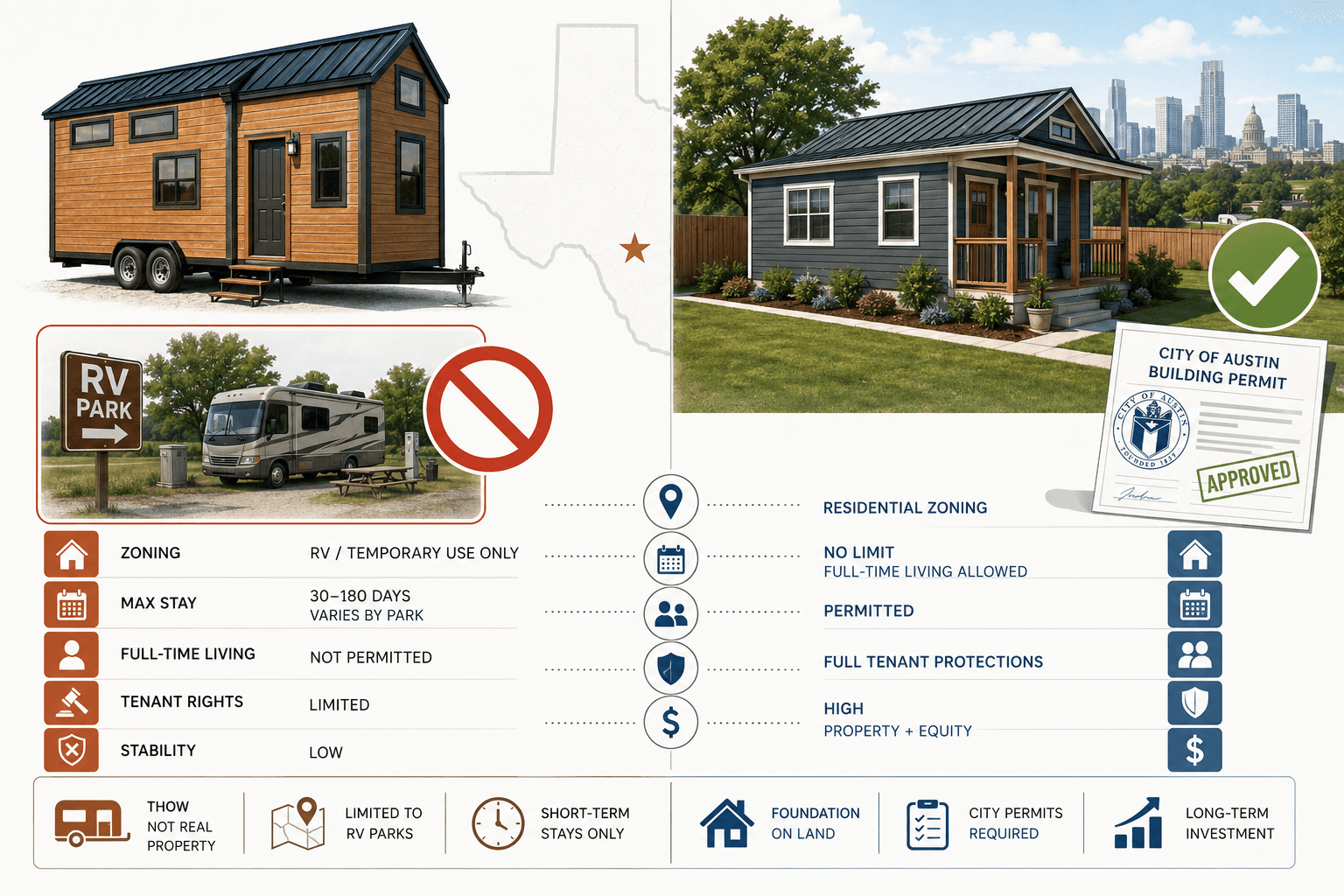
Austin's city code does not use the phrase "tiny home" as a legal category. What matters is how your structure is classified: as a recreational vehicle or as a dwelling unit. That single distinction shapes every decision that follows.
A tiny house on wheels (THOW) is a home built on a trailer chassis. Austin treats it the same way it treats an RV or travel trailer. It does not qualify as a permanent dwelling under residential zoning rules.
A foundation-based tiny home is a small structure built on a permanent foundation. Austin treats it as a conventional dwelling unit, subject to the same permitting and zoning rules as any other house, just smaller.
If you're comparing builders, look for ones with experience navigating Texas building codes. Hill Country Tiny Homes and Timbercraft Tiny Homes both work within Texas regulatory frameworks and are worth reviewing early in your research.
Tiny House Parking in Austin Texas: THOWs vs. Foundation Homes
This is the core question, and the answer is straightforward: your legal options for tiny house parking in Austin Texas are much broader with a foundation home than with a THOW.
| Feature | THOW | Foundation Tiny Home |
|---|---|---|
| Legal classification | Recreational vehicle | Dwelling unit |
| Full-time living allowed? | Only in licensed RV parks | Yes, with proper permits |
| Allowed in residential zones? | Generally no | Yes, under HOME ordinance |
| Requires building permit? | No (but RV park rules apply) | Yes |
| Can be placed as ADU? | No | Yes |
Choose a THOW if you want mobility, plan to travel frequently, and are comfortable with the RV park lifestyle or have access to private land in the county.
Choose a foundation home if you want to stay in Austin long-term, want to be in a residential neighborhood, or plan to use the HOME ordinance to place a unit on family-owned land.
What Austin's HOME Ordinance Means for Tiny Home Placement
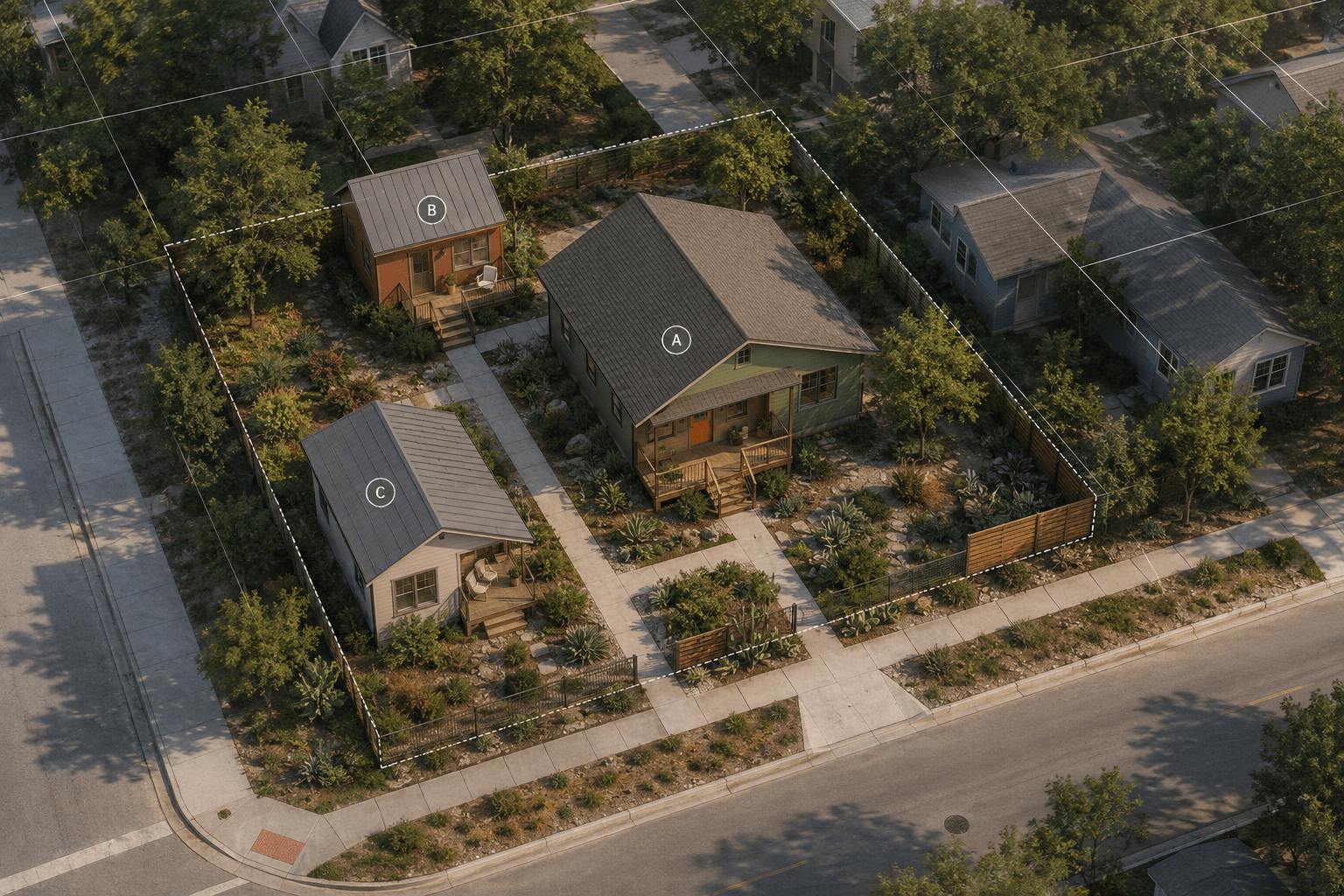
Austin's HOME ordinance is genuinely significant for tiny home seekers. Passed in phases starting in 2023, it allows up to three dwelling units on a single-family residential lot in Austin, without requiring a special permit or variance in most cases.
Here's what that means practically:
- A property owner can place a small primary home plus two additional units on one lot
- A tiny home (foundation-based) can serve as one of those units
- Minimum lot size requirements have been reduced, making more properties eligible
- Accessory dwelling units (ADUs) built as tiny homes can be rented out or used for family members
This is one of the most practical legal paths for tiny house parking in Austin Texas if you're interested in a permanent, foundation-based setup. If someone in your family already owns a lot in Austin, this is worth a serious conversation.
Where Can You Legally Park a THOW in Austin?
Full-time THOW living within Austin city limits is restricted to licensed RV parks and campgrounds. Parking a THOW in a standard residential driveway and living in it full-time is not permitted under current city code.
Legal options for THOW dwellers include:
- Licensed RV parks within Austin — Several exist in and around the city, though spaces fill quickly and monthly rates vary widely
- Tiny home communities — Some communities in the greater Austin metro area are designed specifically for THOWs and may offer hookups, community amenities, and longer-term leases
- Private land in Travis County (outside city limits) — More on this below
- Short-term stays — Campgrounds and RV parks allow short-term stays, which works for people who travel frequently and only need Austin as a home base part of the time
One practical note: even within licensed RV parks, some have restrictions on the age or type of unit they'll accept. Call ahead and ask specifically about THOWs before signing anything.
Travis County vs. Austin City Limits: What Changes
If you're open to living just outside Austin's city limits, Travis County offers meaningfully more flexibility for THOW placement and tiny home living generally.
In unincorporated Travis County:
- Zoning is less restrictive than within Austin proper
- Some rural and semi-rural parcels allow THOW placement with minimal permitting
- Deed restrictions (set by private landowners or HOAs) still apply, so always check those
- Septic and utility hookup requirements still exist and vary by property
The trade-off is distance from Austin's urban core. Many people find a sweet spot in areas like Pflugerville, Manor, Bee Cave, or Dripping Springs, where county rules are more permissive but the commute to Austin remains manageable.
For a broader look at how Texas compares to other states, the Tiny Homes by State directory is a useful reference point.
Tiny Home Communities Near Austin
Dedicated tiny home communities solve a lot of the legal headaches because the land use is already approved for that purpose. Several communities in the greater Austin area cater specifically to THOW owners and tiny home enthusiasts.
What to look for in a community:
- Full hookups (water, electric, sewer or septic)
- Month-to-month or annual lease options
- Clear rules on THOW size and age
- Community amenities (laundry, common areas, mail)
- Proximity to work, schools, or services you need
Some communities are positioned more as RV parks with a tiny home culture. Others are purpose-built with community governance and shared values around sustainability or minimalism. Visit in person before committing.
Builders like Southwest Tiny Homes and Liberation Tiny Homes have experience placing homes in community settings and can sometimes point you toward available lots or communities they've worked with.
Permits and the Application Process
For foundation-based tiny homes in Austin, the permitting process mirrors what any homebuilder goes through, just at a smaller scale.
Basic steps:
- Confirm your lot's zoning classification with Austin's Development Services Department (DSD)
- Verify the lot qualifies under HOME ordinance rules if you're adding a unit to an existing property
- Hire a builder or architect to prepare construction drawings that meet Austin's building code
- Submit plans through Austin's online permitting portal
- Respond to any review comments from DSD
- Receive permit approval and begin construction
- Schedule required inspections at key stages
- Receive certificate of occupancy
The timeline varies. Simple ADU projects in Austin have taken anywhere from a few months to over a year depending on plan complexity and DSD workload. Budget for this uncertainty.
For THOWs, no building permit is required from Austin, but you will need to comply with RV park rules and any applicable state regulations for the trailer itself. RVIA certification (from the Recreational Vehicle Industry Association) is worth having on your THOW because many parks require it.
Common Mistakes to Avoid
People run into the same problems repeatedly when researching tiny house parking in Austin Texas. Here's what to watch for:
- Assuming county rules apply inside city limits. They don't. Austin's city code governs everything within city limits, regardless of what Travis County allows.
- Buying land before checking zoning. Always verify zoning and deed restrictions before purchasing any property for tiny home use.
- Confusing short-term and long-term parking rules. Parking a THOW in a driveway for a weekend is different from living in it full-time. Austin enforces the latter.
- Skipping the HOA check. Many Austin-area neighborhoods have HOAs with rules that go beyond city code. A tiny home may be city-legal but HOA-prohibited.
- Choosing a builder without Texas experience. Building codes vary by state. Work with builders who know Texas requirements. Hill Country Tiny Homes and Timbercraft Tiny Homes are two options with regional familiarity.
FAQ
Can I park a tiny house on wheels in my Austin backyard and live in it? No. Austin classifies THOWs as recreational vehicles. Living in one full-time in a residential backyard is not permitted under current city code. You would need to be in a licensed RV park or campground.
Can I build a tiny home as an ADU on my Austin property? Yes, if it's foundation-based and your lot qualifies. Austin's HOME ordinance allows up to three dwelling units per residential lot, and a small ADU can count as one of those units.
What is the minimum square footage for a tiny home in Austin? Austin's residential building code sets a minimum habitable area for dwelling units. As of 2026, the minimum is generally 150 square feet of habitable space, though this can vary based on unit type and zoning. Confirm current requirements with Austin's Development Services Department.
Do I need an RVIA certification for my THOW in Austin? Austin's city code does not require it, but many RV parks in the area do. RVIA certification (Recreational Vehicle Industry Association) signals that your THOW was built to recognized safety standards, which makes finding a legal parking spot easier.
Are there tiny home communities specifically in the Austin metro area? Yes, several communities in and around Austin cater to tiny home and THOW residents. They range from RV-park-style setups to purpose-built communities with shared amenities. Research current availability directly, as occupancy changes frequently.
What's the difference between Austin city limits and Travis County for tiny home rules? Inside Austin city limits, the city's zoning code applies and is more restrictive for THOWs. In unincorporated Travis County (outside city limits), county rules apply and are generally more permissive, though deed restrictions and utility requirements still matter.
Conclusion
Tiny house parking in Austin Texas is genuinely achievable, but the path forward depends on which type of tiny home you're working with. If you have a THOW, your legal options within city limits are limited to licensed RV parks and dedicated communities. If you're open to a foundation-based home, Austin's HOME ordinance has opened up real opportunities to place a small dwelling unit on a residential lot, either as your primary home or as an ADU on someone else's property.
The most important next step is simple: identify which category your tiny home falls into, then contact Austin's Development Services Department to confirm what's allowed on any specific property you're considering. Don't skip that step. Zoning maps and deed restrictions can vary block by block.
From there, connect with builders who know Texas codes, explore the communities in the metro area, and take a hard look at Travis County if city-limit restrictions feel too tight. You can navigate this. Start where you are, get the right information, and take one concrete step at a time.
For a broader view of tiny home options across the country, explore the Tiny Homes by State directory or browse vetted Texas-area builders like Southwest Tiny Homes and Liberation Tiny Homes to find builders who can help you build something that actually fits your life and your location.
Small footprint. Full life. Austin can work, if you know the rules.