
Last updated: June 24, 2026
Quick Answer: Greywater — wastewater from sinks, showers, and washing machines — makes up 50 to 80% of a tiny home's total wastewater output. Recycling it through a properly designed system can save tens of thousands of gallons per year, cut water costs significantly, and reduce your dependence on municipal hookups or septic systems. The right tiny home greywater system design depends on your location, local regulations, and whether you're on-grid, off-grid, or somewhere in between.
Key Takeaways
- Greywater accounts for 50–80% of tiny home wastewater and can be recycled for irrigation and other non-potable uses
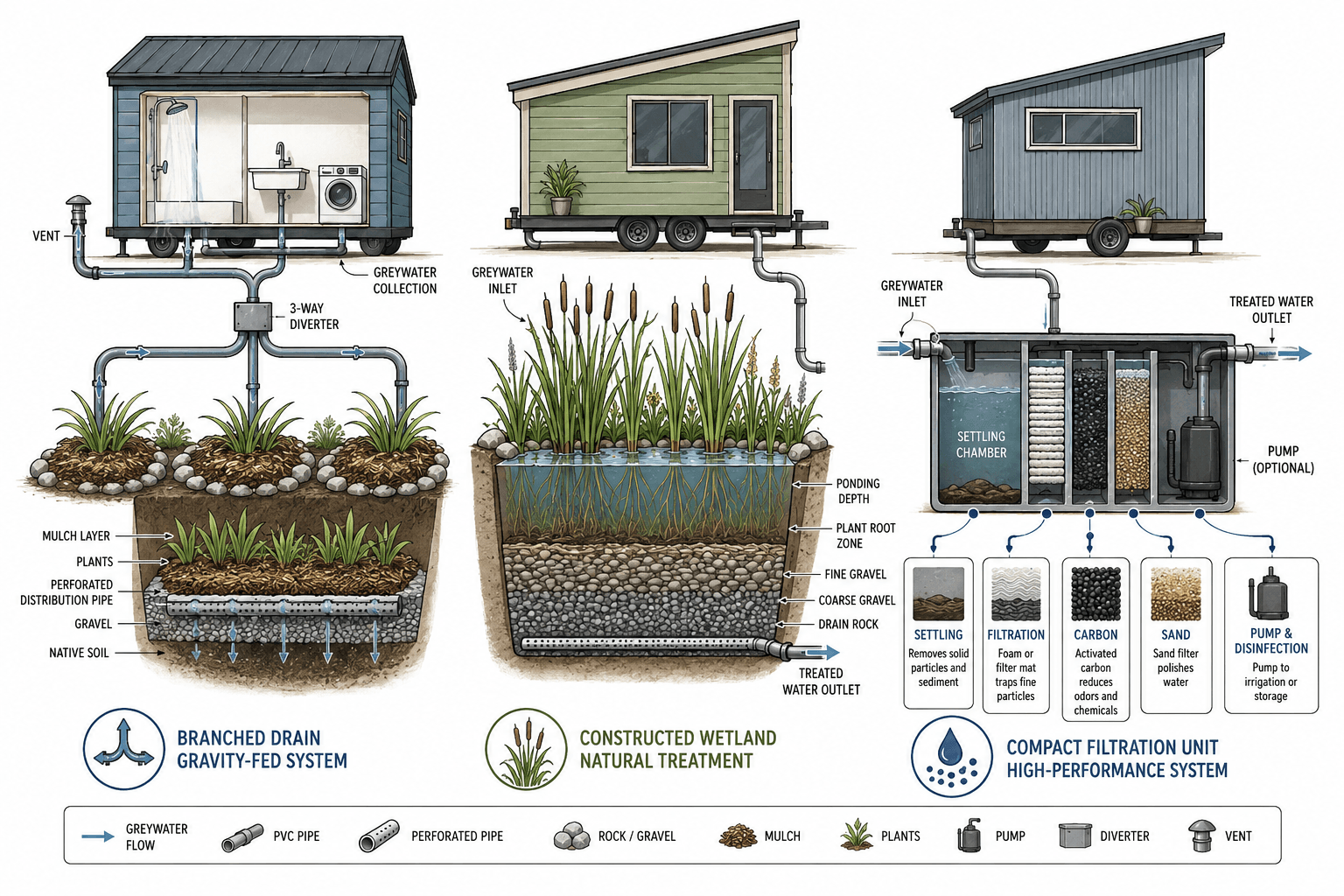
- The three most practical tiny home greywater system designs are branched drain, constructed wetland, and compact filtration units
- DIY systems cost $300–$1,000; professionally installed systems typically run $1,500–$3,000
- Legality varies significantly by state — some states actively permit greywater reuse, others restrict or ban it entirely
- Always use biodegradable, plant-safe soaps when routing greywater to irrigation
- Off-the-shelf systems like the Aqua2Use and Waterleaf Estuary are purpose-built for tiny home use
- Regular filter cleaning and leak checks keep any system running efficiently
- Builders focused on off-grid and sustainable design can integrate greywater systems at the build stage
Table of Contents
- What Is Greywater and Why Does It Matter for Tiny Homes?
- Is Greywater Reuse Legal Where You Live?
- The Three Core Tiny Home Greywater System Designs
- Off-the-Shelf Systems Worth Knowing
- DIY Greywater Options: What's Realistic
- How Much Do Tiny Home Greywater Systems Cost?
- Maintenance: What You're Actually Signing Up For
- Which Tiny Home Builders Already Think About This
- FAQ
What Is Greywater and Why Does It Matter for Tiny Homes?
Greywater is wastewater from non-toilet sources: your bathroom sink, shower, bathtub, and laundry. It does not include toilet waste, which is called blackwater and requires separate, more intensive treatment.
For tiny home owners, this distinction matters a lot. Because tiny homes use water in smaller volumes, the greywater stream is concentrated and manageable. Recycling it — rather than sending it straight to a septic tank or sewer — can meaningfully reduce your environmental footprint and your utility bills.
Over a decade, a well-designed system can save an estimated 270,000 gallons of water. That's not a small number for a small house.
Is Greywater Reuse Legal Where You Live?
Legality is the first thing to check, not the last. Greywater regulations in the US vary widely — by state, county, and sometimes municipality.
States with relatively permissive greywater rules (as of 2026) include California, Arizona, New Mexico, Montana, and Texas. These states have adopted specific greywater codes that allow homeowners to install systems with defined setbacks, approved dispersal methods, and soap restrictions.
States with stricter or unclear rules include many in the Northeast and Midwest, where greywater reuse may be classified under general plumbing or septic codes that effectively prohibit it without a special permit.
What to do before you build or install:
- Contact your county health department or building department directly
- Ask specifically about "greywater reuse" or "greywater irrigation" — not just "septic alternatives"
- Check whether your state has adopted the International Plumbing Code's greywater appendix
- If you're in a THOW (tiny home on wheels), ask about the regulations at your intended parking location, not just your home state
For state-by-state zoning context, the Tiny Homes by State directory is a solid starting point. If you're in Arizona, the 2026 Arizona tiny homes guide covers water and off-grid considerations specific to desert climates.
The Three Core Tiny Home Greywater System Designs
Most practical tiny home greywater system designs fall into one of three categories. Each has a different complexity level, cost, and best-use scenario.
1. Branched Drain Gravity System
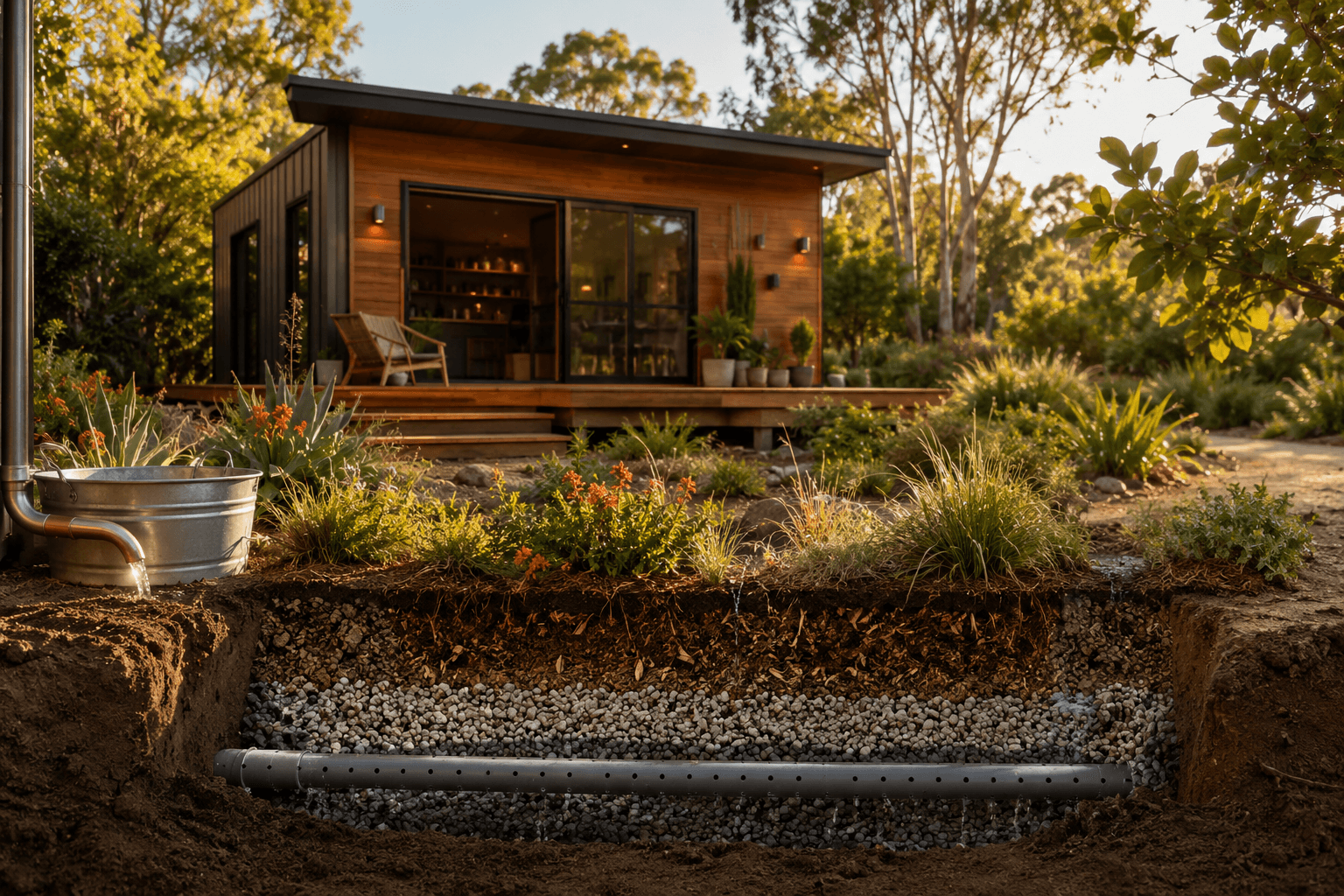
This is the simplest design. Greywater flows by gravity through a branching network of pipes to mulch basins or subsurface irrigation zones in your yard. No pump, no electricity, no filter media to replace.
Best for: Permanent or semi-permanent tiny homes on land with enough outdoor space for dispersal zones. Works well in mild climates where outdoor irrigation is useful year-round.
Limitation: Requires a sloped site and can't be used in freezing climates without winterization.
2. Constructed Wetland (Artificial Marsh)
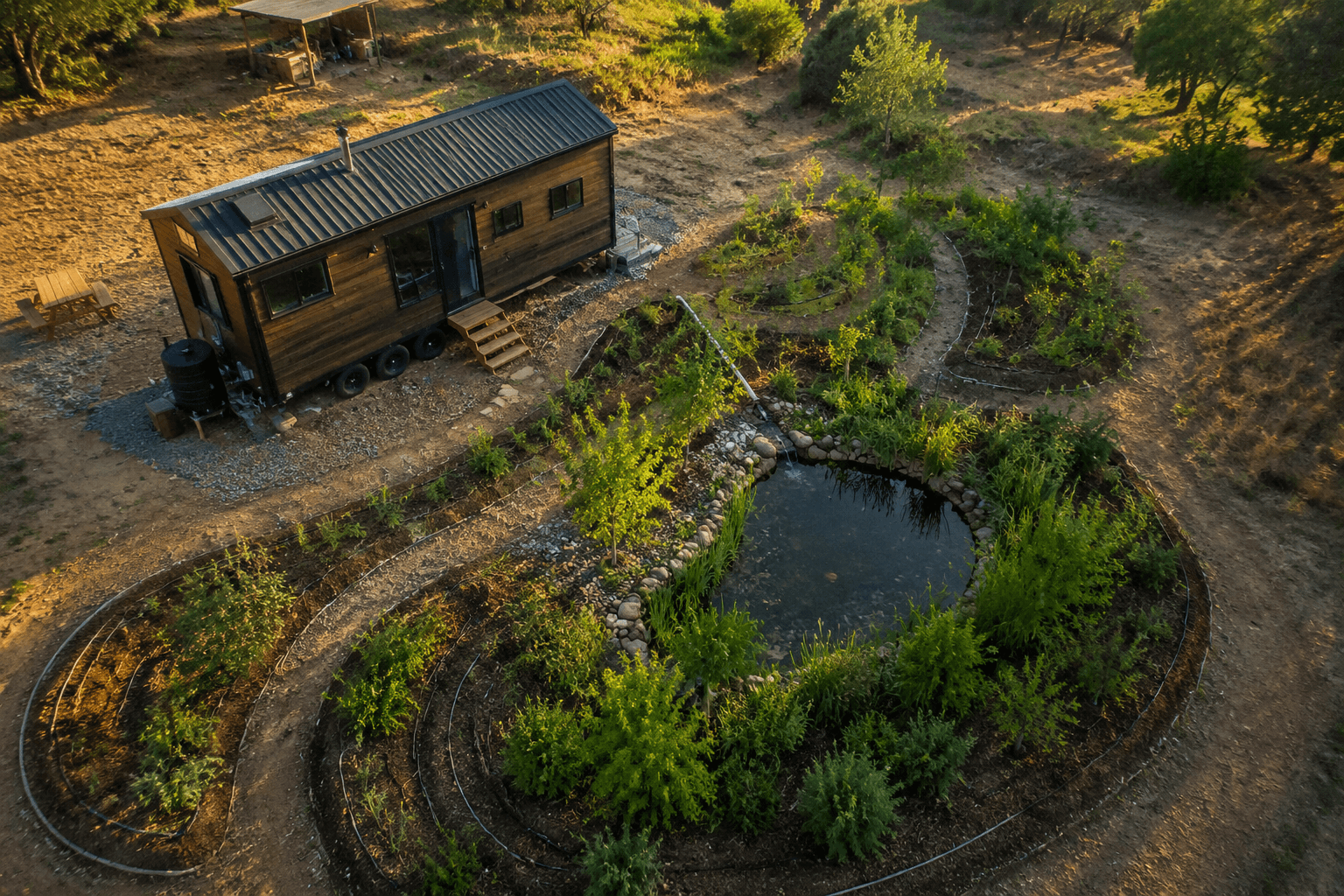
Greywater flows into a gravel-filled bed planted with water-tolerant plants like cattails or bulrushes. The plants and microbes in the gravel filter the water naturally before it disperses into the soil.
Best for: Off-grid tiny homes with more land, owners who want a low-maintenance, nature-based system, and warmer climates where plants stay active.
Limitation: Requires more space than other options and a longer setup time before the wetland becomes fully functional.
3. Compact Filtration Unit
A mechanical system with filter stages (screen filter, biofilter, sometimes UV treatment) that processes greywater for subsurface irrigation or toilet flushing. These are the most versatile and the most suitable for tiny homes on wheels or small lots.
Best for: THOWs, tiny homes on small urban lots, or anyone who needs a contained, code-compliant solution.
Limitation: Higher upfront cost and requires more active maintenance than gravity systems.
Off-the-Shelf Systems Worth Knowing
Two purpose-built products stand out for tiny home use in 2026.
Aqua2Use (Water Wise Group): A compact unit designed specifically for tiny homes. It captures greywater from showers, sinks, and washing machines through six simple plumbing connections. It's a good fit for off-grid setups and doesn't require major plumbing overhauls.
Waterleaf Estuary: A nature-powered system that treats both greywater and blackwater onsite. It operates quietly, requires minimal maintenance, and is designed for off-grid living. Over a decade of use, the manufacturer estimates savings of around 270,000 gallons and roughly $8,000 in water costs.
Both systems are worth comparing against your specific water use patterns and local code requirements before purchasing.
DIY Greywater Options: What's Realistic
A DIY branched drain system is genuinely achievable for a handy tiny home owner. The basic components — PVC pipe, fittings, mulch, and a simple surge tank — are available at any hardware store.
A basic DIY setup involves:
- Identifying your greywater sources (shower drain, bathroom sink, laundry)
- Separating those drain lines from your blackwater line
- Running greywater through a simple mesh filter to catch hair and solids
- Directing filtered water to mulch basins or subsurface drip lines via gravity
- Using only plant-safe, biodegradable soaps in the connected fixtures
The key constraint is your site. If you don't have outdoor space for dispersal, a DIY gravity system won't work. In that case, a compact filtration unit is the more realistic path.
How Much Do Tiny Home Greywater Systems Cost?
Here's a straightforward cost breakdown:
| System Type | DIY Cost | Professionally Installed |
|---|---|---|
| Branched drain gravity | $300–$600 | $800–$1,500 |
| Constructed wetland | $500–$1,000 | $1,500–$2,500 |
| Compact filtration unit | $700–$1,200 | $1,500–$3,000 |
| Off-the-shelf (Aqua2Use, Estuary) | N/A | $1,500–$3,000+ |
These are estimates based on typical material and labor costs in 2026. Costs vary by region, site conditions, and local permit fees.
Maintenance: What You're Actually Signing Up For
Every greywater system needs some upkeep. The good news: it's not complicated. The bad news: skipping it leads to clogs, odors, and potential health code violations.
Monthly tasks:
- Clean mesh or screen filters
- Check for slow drainage or standing water near dispersal zones
Quarterly tasks:
- Inspect all pipe connections for leaks
- Flush surge tanks if your system uses one
- Check that dispersal zones are absorbing water properly
Annually:
- Replace filter media in mechanical systems
- Inspect wetland plantings if you're running a constructed wetland
- Confirm your system still meets current local code requirements
One consistent rule across all system types: only biodegradable, plant-safe soaps and detergents should go down drains connected to your greywater system. Conventional cleaning products can contaminate soil and kill the beneficial microbes your system depends on.
Which Tiny Home Builders Already Think About This
If you want greywater capability built in from day one, work with a builder who has experience with off-grid and sustainable systems. A few worth exploring:
- Sol Haus Design focuses on sustainable tiny home design and is well-suited for owners thinking about water systems from the ground up
- Greenpod Development has a strong track record with eco-conscious builds
- Sprout Tiny Homes is worth a look for off-grid-ready configurations
- Old Hippie Design brings a sustainability-first approach to custom builds
You can also browse the full off-grid ready builder listings to find builders in your region who already incorporate water management into their designs.
Conclusion
Greywater recycling is one of the most practical upgrades a tiny home can have. It reduces water consumption, lowers utility costs over time, and makes off-grid living more viable. The right system depends on three things: your local regulations, your site conditions, and your budget.
Start by checking your state and county rules. Then match a system type to your situation — gravity-fed if you have the land and slope, compact filtration if you're on a small lot or on wheels. If you're building new, bring this conversation to your builder early. Systems integrated at the build stage are almost always cleaner and more code-compliant than retrofits.
Your next steps:
- Check your county health department's rules on greywater reuse
- Decide between DIY, off-the-shelf, or builder-integrated based on your timeline and budget
- Switch to biodegradable soaps now — that's a free first step regardless of which system you choose
- Browse off-grid capable builders if you're still in the planning phase
Small footprint. Full life. A greywater system is one of the clearest ways to make both of those things more true.
FAQ
What is greywater in a tiny home context? Greywater is wastewater from sinks, showers, and washing machines — everything except toilet waste. In a tiny home, it typically makes up 50–80% of total wastewater output and can be recycled for irrigation or other non-potable uses.
Is greywater reuse legal in all US states? No. Legality varies by state and county. States like California, Arizona, and Texas have specific greywater codes. Many other states have no clear rules or restrict reuse under general plumbing codes. Always check with your local health or building department before installing a system.
Can a tiny home on wheels (THOW) use a greywater system? Yes, but with limitations. A THOW needs a compact, contained system — typically a mechanical filtration unit rather than a gravity-fed outdoor system. Legality also depends on where the THOW is parked, not just where it's registered.
What soaps are safe to use with a greywater system? Only biodegradable, plant-safe soaps and detergents. Conventional cleaning products contain chemicals that can harm soil microbes, contaminate groundwater, and damage your system's biological filtration. Look for products labeled biodegradable and free of boron, chlorine bleach, and synthetic fragrances.
How long does a greywater system last? A well-maintained gravity system can last 20 years or more since it has no moving parts. Mechanical filtration units typically last 10–15 years with regular filter replacements. Constructed wetlands can function indefinitely with proper plant management.
Do I need a permit to install a greywater system? In many states, yes — especially for anything beyond a simple laundry-to-landscape system. Permit requirements vary widely. Some jurisdictions require a licensed plumber; others allow homeowner installation with an inspection. Check local rules before you start.
What's the difference between greywater and blackwater? Greywater comes from non-toilet fixtures: sinks, showers, bathtubs, and washing machines. Blackwater includes toilet waste and requires a septic system, composting toilet, or municipal sewer connection. The two should never be mixed in a greywater recycling system.
Meta Title: Tiny Home Greywater System Designs That Work in 2026
Meta Description: Explore the best tiny home greywater system designs for 2026 — from DIY branched drain setups to off-the-shelf units. Includes costs, legality by state, and maintenance tips.
Tags: tiny home greywater system designs, greywater recycling, off-grid tiny homes, tiny home water systems, greywater legality by state, DIY greywater, constructed wetland, branched drain system, tiny home plumbing, sustainable tiny homes, water conservation, off-grid water management