
Last updated: June 24, 2026
Quick Answer: Idaho has a growing number of tiny home communities concentrated around Boise, Coeur d'Alene, and the Sun Valley corridor. Zoning rules vary sharply by county, but recent state legislation has made it easier to place both foundation-built tiny homes and tiny homes on wheels (THOWs) in more locations. Monthly costs in established communities typically run $800–$1,500, covering lot rent and basic utilities.
Key Takeaways
- Idaho lacks a single statewide tiny home law — rules are set at the city and county level, so always verify locally before you commit
- Boise approved THOWs citywide in June 2025 wherever ADUs are permitted, with monthly space-and-home costs averaging around $1,000
- Post Falls passed an ordinance in 2024 allowing tiny homes as ADUs on permanent foundations, defined as structures under 800 square feet
- A 2026 state housing package now permits ADUs in cities over 10,000 residents and allows lots as small as 1,500 square feet — the smallest minimum in the U.S.
- Kootenai County (Coeur d'Alene area) faces a shortage of nearly 5,000 homes, pushing developers toward cottage and tiny home community formats
- Rural counties like Lemhi and Custer have more relaxed regulations and raw land starting around $15,000 — popular with off-grid tiny home seekers
- Snake River Tiny Homes in Idaho Falls was named Best Tiny Home Dealership of 2025, and several vetted Idaho builders are listed in the Tiny Home Sherpa directory
Table of Contents
- Why Idaho Tiny Home Communities Are Growing Fast
- How Idaho Zoning Laws Affect Your Options
- Boise Metro Tiny Home Communities: What's Available
- North Idaho Communities: Coeur d'Alene and Beyond
- Sun Valley Area and Rural Idaho Options
- THOW vs. Foundation-Built: Which Works Best in Idaho
- What to Expect on Costs and Lot Availability
- Idaho Builders Worth Knowing
- FAQ
Why Idaho Tiny Home Communities Are Growing Fast
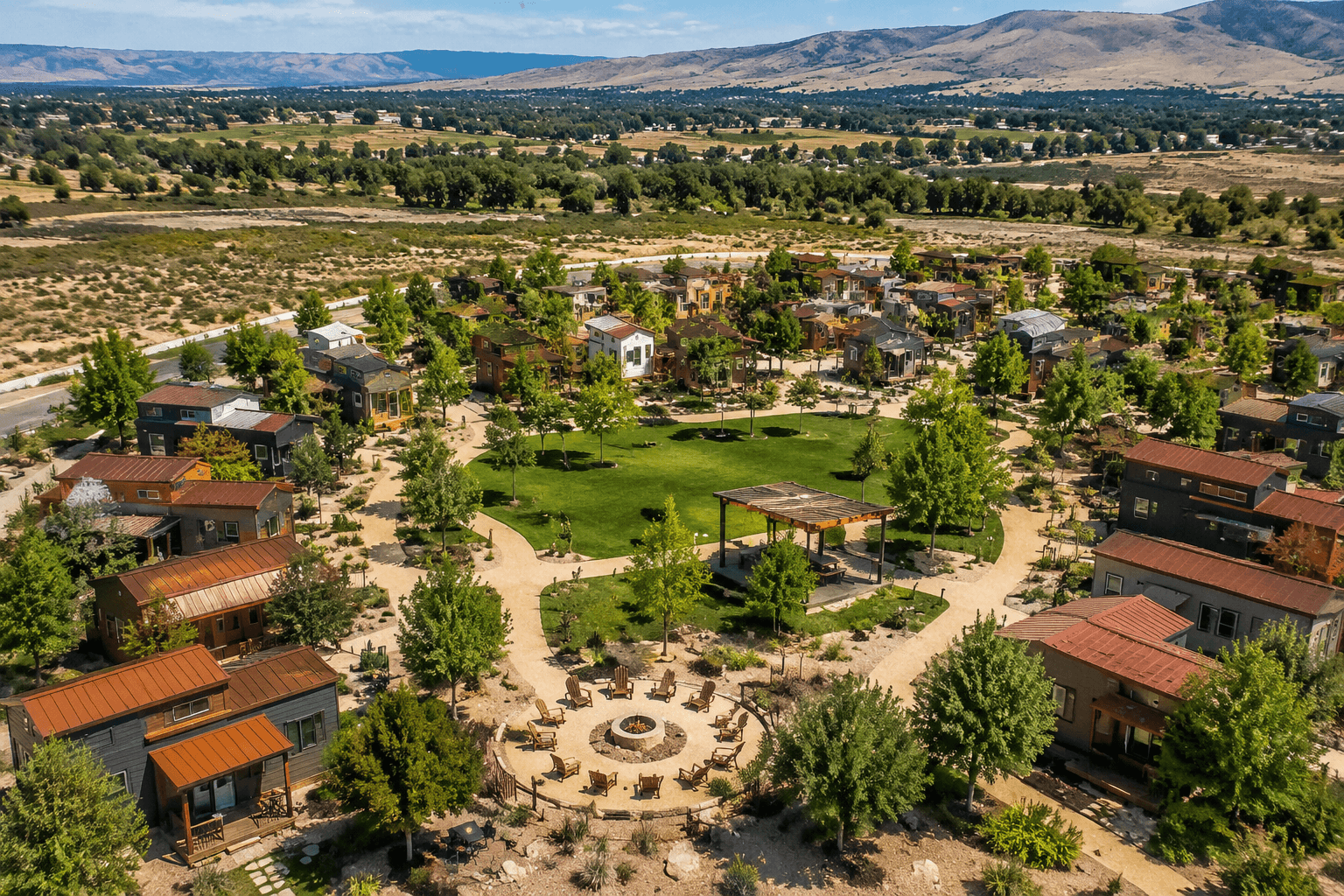
Idaho's housing market has pushed many buyers toward smaller, more affordable alternatives. The median home price in Kootenai County alone hit $595,000 in 2025 — an 8% jump from the year before. That kind of pressure is exactly why Idaho tiny home communities have moved from niche curiosity to practical option for thousands of residents.
The state's 2026 housing reform package accelerated things further. New laws now allow ADUs (accessory dwelling units) in any Idaho city with more than 10,000 residents and permit development on lots as small as 1,500 square feet. That's a meaningful shift. It opens doors for infill tiny home projects in cities that previously blocked them.
If you're researching tiny living across multiple states, the complete state-by-state tiny home directory is a good place to benchmark what Idaho offers compared to neighboring states.
How Idaho Zoning Laws Affect Your Options
Idaho has no single statewide tiny home law. Every county and city sets its own rules, which means your options depend heavily on where you want to land.
Here's a practical breakdown:
| Location Type | Foundation Tiny Homes | THOWs Allowed | Notes |
|---|---|---|---|
| Boise / Ada County | Yes, with permits | Yes (2025 approval) | Stricter codes, minimum size requirements apply |
| Post Falls | Yes (under 800 sq ft) | Check locally | 2024 ordinance; permanent foundation required |
| Kootenai County | Varies by city | Varies | Developer interest growing due to housing shortage |
| Lemhi / Custer Counties | Generally lenient | Often permitted | Popular for rural and off-grid setups |
| Sun Valley / Blaine County | Restrictive | Limited | High land costs; check with county planning |
Many Idaho jurisdictions have adopted Appendix Q of the 2021 International Residential Code (IRC), which specifically addresses homes under 400 square feet. But not all of them enforce it. Before you sign anything, call the local building department directly.
For a deeper look at how zoning laws shape your choices, the tiny home zoning laws tag on Tiny Home Sherpa covers the key variables to watch.
Boise Metro Tiny Home Communities: What's Available
The Boise area is Idaho's most active market for tiny home development. In June 2025, Boise formally approved THOWs citywide in areas where ADUs are permitted — a decision that followed a successful pilot program showing these homes handle Idaho winters well. Monthly costs for a space plus the home average around $1,000, and purchase prices for the homes themselves run $80,000 to $180,000.
In Meridian, just west of Boise, a proposed development called "Klein Huis" would bring 134 single-family rental homes to the area, with units ranging from 650 to 1,290 square feet. The plans include a clubhouse and pool — more of a cottage community format than a traditional tiny home park, but worth tracking if you want a community feel with smaller square footage.
What to look for in Boise-area communities:
- ADU-zoned lots that accept THOWs
- Hookups for water, sewer, and electric (not all lots include all three)
- HOA or community rules around exterior appearance and parking
- Proximity to employment corridors in Nampa, Meridian, and downtown Boise
North Idaho Communities: Coeur d'Alene and Beyond
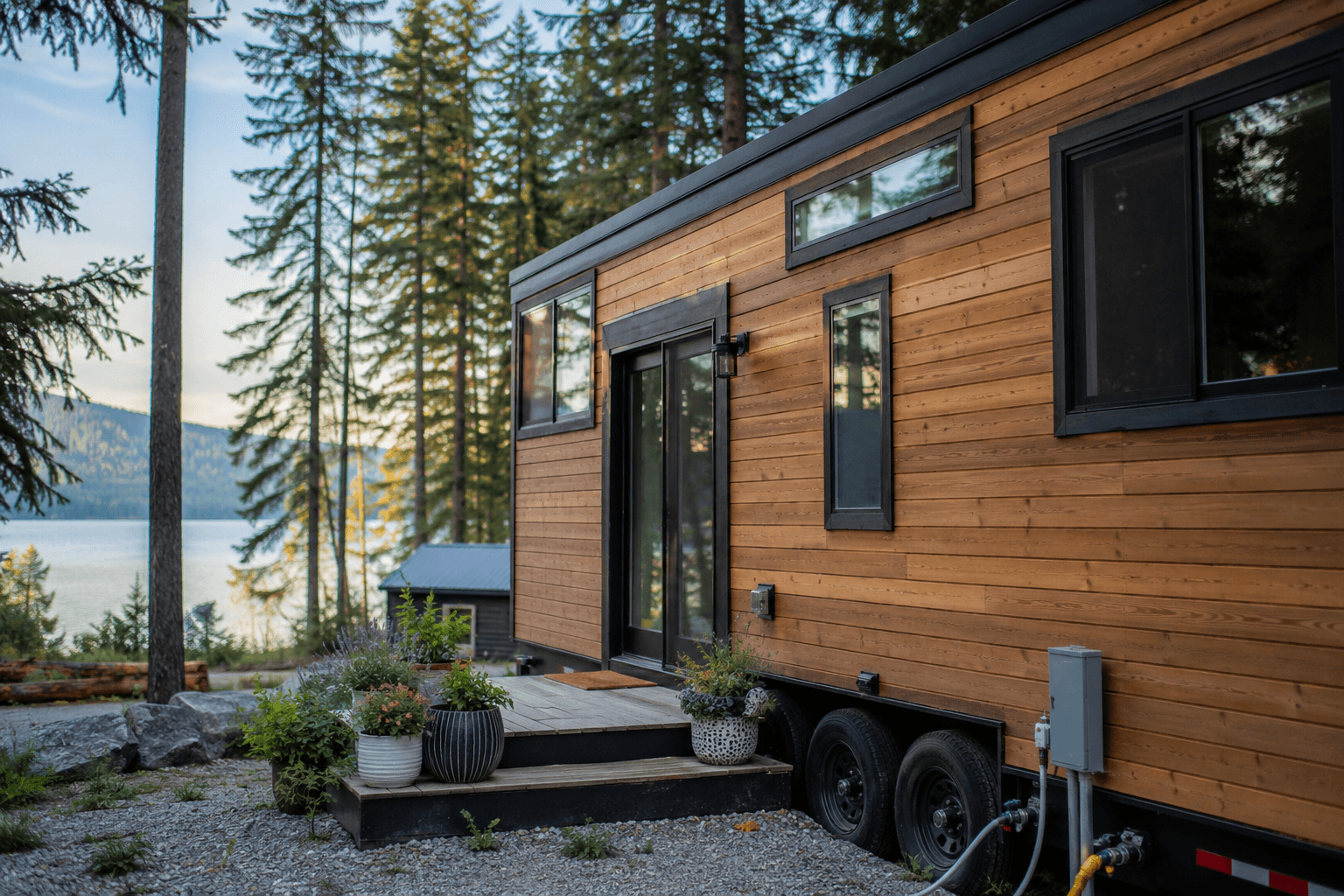
North Idaho is dealing with a genuine housing crunch. Kootenai County is short nearly 5,000 homes, and developers in Coeur d'Alene, Post Falls, Hayden, and Rathdrum are responding with a wider mix of housing types — including cottage clusters and tiny home communities.
Post Falls made a concrete move in June 2024, passing an ordinance that allows tiny homes as ADUs. The rules: permanent foundation, under 800 square feet. That's a workable framework for anyone who wants a fixed-location tiny home with legal standing.
In Bonner County, north of Coeur d'Alene, Tiny House Estates in Sandpoint is one of Idaho's most established purpose-built tiny home communities. It's a gated neighborhood with lot leases and shared amenities — the kind of place where you get a real neighborhood feel without building from scratch. Lot availability varies, so direct contact with the community is the best way to check current openings.
Sun Valley Area and Rural Idaho Options
The Sun Valley corridor (Blaine County) is beautiful but expensive. Land costs are high, and local zoning tends to be more restrictive than other parts of Idaho. It's not the most accessible entry point for tiny home living unless you already have land there.
Rural counties are a different story. Lemhi and Custer counties in central Idaho have more relaxed regulations and raw parcels starting around $15,000. These areas attract buyers who want off-grid setups — solar power, composting systems, rainwater collection. If that's your direction, the trade-off is distance from services and employment.
In Bannock County, one family has taken a creative approach by repurposing grain bins into tiny homes near Lava Springs — offering travelers a genuinely distinctive stay and demonstrating how unconventional structures can work within the tiny home framework.
THOW vs. Foundation-Built: Which Works Best in Idaho
A THOW (tiny home on wheels) is a home built on a trailer chassis, designed to be movable. A foundation-built tiny home is exactly what it sounds like — a permanent structure on a lot.
Choose a THOW if:
- You want flexibility to relocate
- You're placing your home in Boise, where THOWs are now approved citywide
- You're renting a lot rather than owning land
Choose a foundation-built tiny home if:
- You own or are buying land
- You're in Post Falls or another city that requires permanent foundations for ADU classification
- You want a traditional mortgage path (THOWs typically require personal property or RV loans)
Idaho winters are real. Any THOW you place in Idaho should be built for cold climates — proper insulation, skirting, and winterized plumbing are not optional. Boise's pilot program specifically tested THOW performance in winter conditions before approving citywide placement.
What to Expect on Costs and Lot Availability
Here's a realistic picture of what you'll spend in Idaho tiny home communities:
- THOW purchase price: $80,000–$180,000 (new builds from Idaho dealers)
- Monthly lot rent (community): $600–$1,200 depending on location and amenities
- Combined space + home monthly cost (Boise): Around $1,000 average
- Raw rural land: Starting around $15,000 for buildable parcels in rural counties
- Foundation tiny home build: Varies widely by builder and spec; expect $90,000–$200,000+ for a turnkey build
Lot availability in established communities like Tiny House Estates in Sandpoint is limited. The Boise metro has more options but more competition. Rural land is plentiful but comes with infrastructure costs (well, septic, road access) that add up fast.
Idaho Builders Worth Knowing
Several Idaho-based and Idaho-serving builders are listed in the Tiny Home Sherpa directory. Tiny Idahomes is one of the most recognized names in the state, with builds suited to Idaho's climate and zoning landscape.
Snake River Tiny Homes, based in Idaho Falls, was named Best Tiny Home Dealership of 2025 by Insider Weekly Magazine. They assist buyers with transportation logistics, insurance, and zoning requirements — useful support for first-time buyers navigating an unfamiliar process.
If you're open to builders from neighboring states who serve Idaho, Alpine Tiny Homes and Wind River Tiny Home are worth reviewing. Both build for mountain-climate conditions. For a broader search, the full tiny home builders directory lets you filter by location and features.
FAQ
Are tiny homes legal in Idaho? Yes, but legality depends on your specific city or county. Idaho has no single statewide tiny home law. Some jurisdictions follow the 2021 IRC Appendix Q for homes under 400 square feet; others have their own ordinances. Always verify with the local building department before purchasing land or a home.
Can I park a THOW in Boise? Yes. As of June 2025, Boise allows THOWs citywide in areas where ADUs are permitted. Monthly costs for a space and home average around $1,000.
What is the smallest lot size allowed in Idaho? As of May 2026, Idaho state law requires cities to approve housing on lots as small as 1,500 square feet — the smallest minimum lot size requirement in the United States.
Where is the most established tiny home community in Idaho? Tiny House Estates in Sandpoint (Bonner County) is one of the longest-running purpose-built tiny home communities in the state. It offers lot leases and shared amenities in a gated neighborhood setting.
Do Idaho tiny home communities accept THOWs? Some do, some don't. Boise has the clearest citywide approval. Post Falls requires permanent foundations for ADU classification. Rural communities vary. Always ask specifically about THOW acceptance, hookup availability, and any weight or size restrictions.
What rural counties in Idaho are most tiny-home-friendly? Lemhi and Custer counties are frequently cited for their more relaxed regulations and affordable land. Raw parcels start around $15,000, and off-grid setups are common. The trade-off is distance from urban services.
How do I find a vetted Idaho tiny home builder? The Tiny Home Sherpa builder directory lists vetted builders with location and feature filters. Tiny Idahomes is a good starting point for Idaho-specific builds.
Conclusion
Idaho's tiny home landscape is genuinely changing. State-level housing reforms, city-level THOW approvals, and a growing number of purpose-built communities mean more real options than existed even two years ago. But the rules are still local, and the details still matter.
Your next steps, in order:
- Decide between a THOW and a foundation-built home — this shapes every other decision
- Identify your target region (Boise metro, North Idaho, rural central Idaho) and call the local building department
- Research lot availability in established communities like Tiny House Estates in Sandpoint or ADU-zoned lots in Boise
- Connect with a vetted Idaho builder through the Tiny Home Sherpa directory to understand build timelines and costs
- Confirm financing options early — THOWs and foundation homes use different loan products
Small footprint. Full life. Idaho has the terrain for both — you just need to know where to look.