
Last updated: May 18, 2026
Quick Answer: Tiny homes in Delaware are legal to place, but the rules depend heavily on which county you're in and what type of tiny home you have. Sussex County is the most flexible — especially for coastal and RV-park placements — while New Castle County has stricter zoning. Retirees, coastal buyers, and THOW (tiny home on wheels) owners all have viable paths here, but you need to know the right questions before you start.
Key Takeaways
- 🏡 Delaware has three counties, each with different zoning rules. Sussex County is generally the most tiny-home-friendly.
- 🌊 Coastal tiny home living is possible near Rehoboth Beach, Lewes, and Bethany Beach — but seasonal restrictions and flood zone rules apply.
- 👴 Retirement-friendly communities exist in Sussex County and are growing, especially for 55+ buyers wanting smaller footprints.
- 🚐 THOWs (tiny homes on wheels) can be placed in RV parks and campgrounds statewide, with full hookups available at many sites.
- 📐 Minimum square footage varies by municipality — some areas require as little as 150 sq ft for an ADU (accessory dwelling unit), others require 600+ sq ft.
- 💰 Cost to buy or build a tiny home in Delaware typically ranges from $45,000 to $150,000 depending on type, size, and finish level.
- 🔑 RVIA certification matters if you plan to place a THOW in an RV park — many parks require it.
- 📋 Always verify local zoning before purchasing land or a home. County rules change, and what's allowed in one township may not be allowed in the next.
What Are the Zoning Rules for Tiny Homes in Delaware?
Zoning for tiny homes in Delaware is handled at the county and municipal level — there's no single statewide standard. That means the rules in Wilmington look very different from the rules in Lewes or Georgetown.
Here's a county-by-county breakdown:
| County | General Stance | Key Notes |
|---|---|---|
| New Castle | More restrictive | Minimum dwelling sizes apply; ADUs allowed in some zones |
| Kent | Moderate | Some rural zones allow smaller structures; check township rules |
| Sussex | Most flexible | RV parks, seasonal communities, and some ADU-friendly zones |
New Castle County covers the Wilmington metro area. Zoning here tends to mirror suburban Mid-Atlantic standards — minimum square footage requirements can run 700 sq ft or higher in residential zones. ADUs are allowed in some districts, but the approval process is detailed.
Kent County (Dover area) sits in the middle. Rural parcels offer more flexibility, and some agricultural zones allow accessory structures that could qualify as tiny homes if they meet basic building codes.
Sussex County is where most tiny home activity in Delaware happens. It covers the entire southern part of the state, including the beach communities. RV parks and campgrounds are common here, and some planned communities specifically welcome smaller homes.
Common mistake: Assuming that because tiny homes are "legal in Delaware," your specific parcel is automatically approved. Always pull the zoning ordinance for your exact address before signing anything.
Is Coastal Tiny Home Living Actually Possible Near Delaware Beaches?
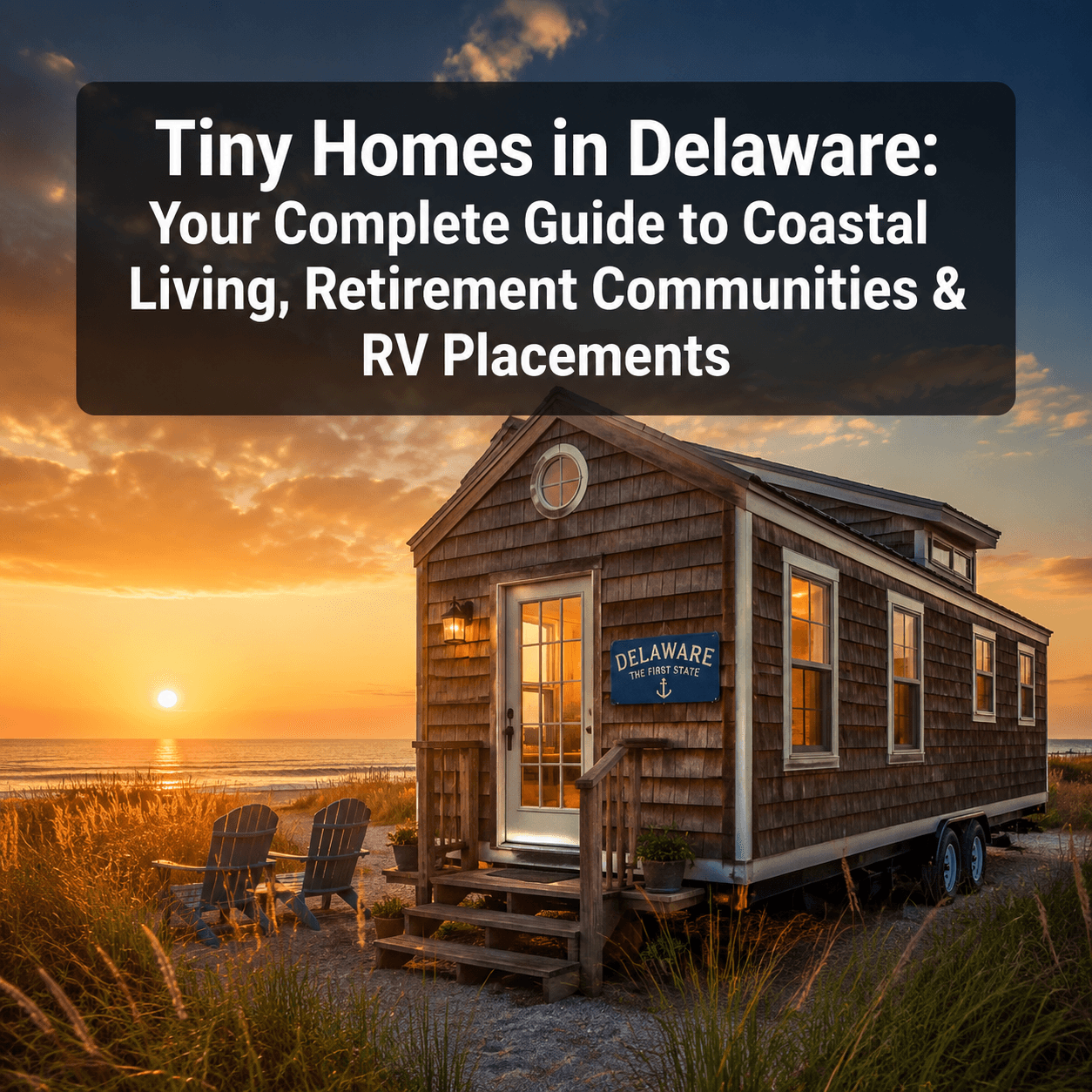
Yes — but with conditions. Delaware's coastline runs through Sussex County, covering towns like Rehoboth Beach, Lewes, Dewey Beach, and Bethany Beach. These areas are popular with buyers from Philadelphia, Baltimore, and northern New Jersey.
What works:
- Placing a THOW in a licensed RV park or campground near the coast
- Buying into a planned tiny home or cottage community in Sussex County
- Building a small ADU on a larger coastal property (subject to flood zone and setback rules)
What's harder:
- Placing a foundation-built tiny home on a small vacant lot in a beach town — local ordinances often have minimum size requirements
- Year-round occupancy in seasonal parks — many coastal campgrounds are only open April through October
Flood zone awareness: Much of Delaware's coastline falls within FEMA flood zones. If you're building or placing a home on a foundation, you'll need to meet elevation requirements and carry flood insurance. This adds cost but doesn't make tiny home placement impossible.
If you're drawn to coastal tiny living but want more flexibility on placement rules, it's worth comparing notes with buyers researching tiny homes in other coastal states — the regulatory patterns are instructive.
Are There Tiny Home Retirement Communities in Delaware?
Delaware is one of the most retirement-friendly states in the Northeast — no Social Security tax, low property taxes, and a mild four-season climate. That combination has made it a natural draw for 55+ buyers considering a smaller footprint.
What exists right now:
- Several 55+ manufactured and modular home communities in Sussex County that welcome smaller homes
- A growing number of planned cottage communities near Lewes and Milton that cater to downsizers
- RV resort communities with year-round residency options that attract retirees
What to look for in a retirement-focused tiny community:
- Year-round residency permitted (not just seasonal)
- On-site amenities (clubhouse, walking paths, community garden)
- Land lease vs. land ownership — understand which model applies
- HOA rules around home size, appearance, and modification
Choose a land-lease community if you want lower upfront costs and built-in maintenance. Choose land ownership if you want equity and long-term stability. Both models exist in Delaware.
Builders who specialize in retirement-scale homes — compact, single-level, accessible — are worth seeking out. Check our vetted tiny home builders directory to filter by style and region.
Where Can You Park a THOW (Tiny Home on Wheels) in Delaware?
A THOW — a tiny home built on a trailer chassis — is treated legally as a recreational vehicle in most of Delaware. That means your primary placement options are RV parks, campgrounds, and private land with owner permission.
Placement options for THOWs in Delaware:
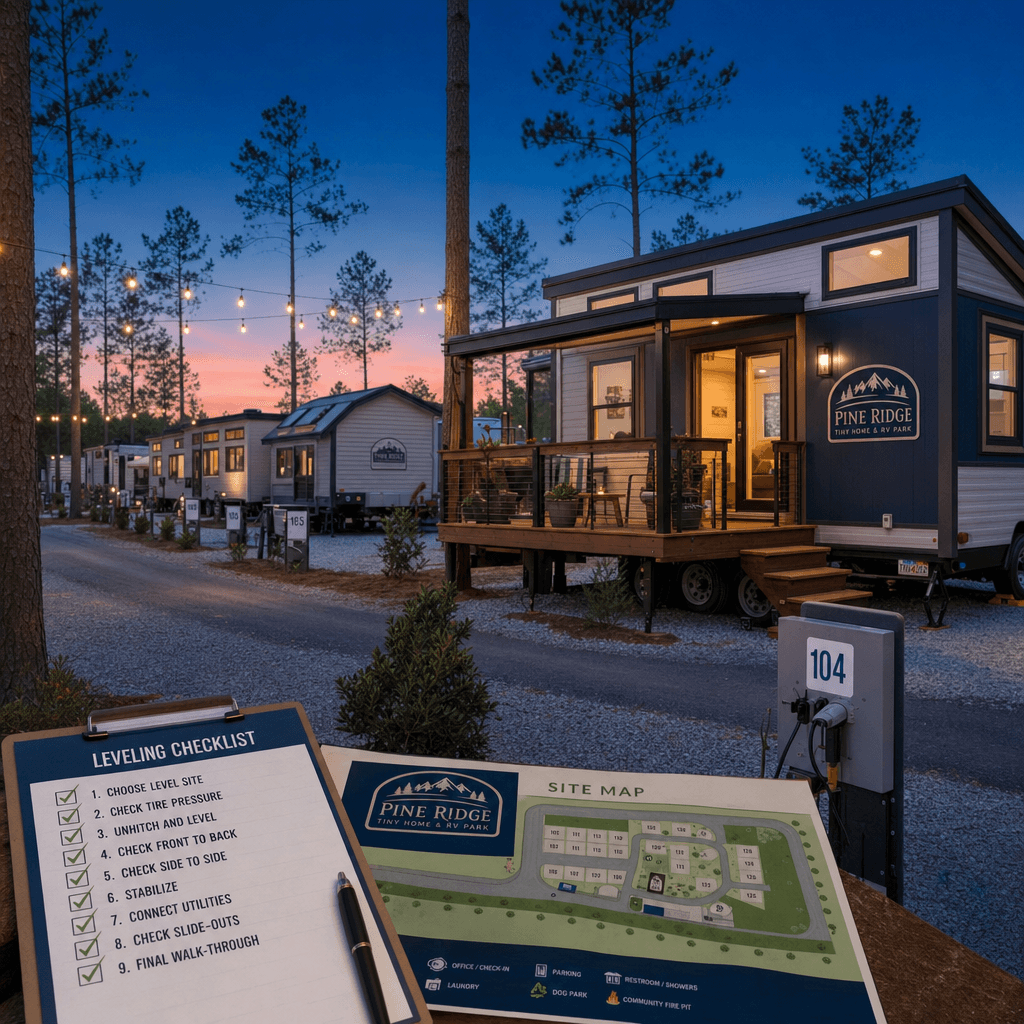
- Licensed RV parks — Most common option. Full hookups (water, electric, sewer) available at many sites. Look for parks that allow long-term or year-round stays.
- Private land — If you own or have permission to use rural land in Kent or Sussex County, a THOW may be allowed as a temporary structure. Check county rules on duration and utility connections.
- Tiny home communities — A small but growing number of communities in Delaware specifically welcome THOWs alongside park models and small cottages.
RVIA certification: Many RV parks require that your THOW carry an RVIA (Recreation Vehicle Industry Association) certification. This is a safety and construction standard, not a lifestyle judgment. If you're buying a new THOW, confirm certification before purchase.
Builders like Wheel Life Tiny Homes and Cornerstone Tiny Homes build RVIA-certified units that travel well and meet park requirements in the Mid-Atlantic region.
Edge case: Some Delaware townships allow a THOW as a temporary dwelling on a property where a primary home is being constructed. This is a useful workaround for buyers building a permanent structure — but it typically has a time limit (often 12–18 months).
What Does a Tiny Home Actually Cost in Delaware in 2026?
Cost depends on three things: the type of tiny home, the level of finish, and whether you're buying land or placing in a community.
Rough cost ranges (2026 estimates):
| Home Type | Low End | High End |
|---|---|---|
| DIY THOW shell kit | $20,000 | $45,000 |
| Professionally built THOW | $60,000 | $120,000 |
| Park model (semi-permanent) | $50,000 | $100,000 |
| Foundation-built tiny home | $80,000 | $200,000+ |
| Container home conversion | $40,000 | $130,000 |
Land costs in Delaware vary widely. Rural Kent County parcels can run $30,000–$80,000 per acre. Sussex County land near the coast is significantly higher — beach-adjacent lots can exceed $200,000 for a small parcel.
Community lot rents in RV parks and tiny home communities typically run $500–$1,200/month in Delaware, depending on location and amenities.
If you're exploring container-style builds, Custom Container Living is one builder worth reviewing for Mid-Atlantic placements.
How Do You Find Builders Who Deliver to Delaware?
Delaware's small size is actually an advantage here. Most builders in the Mid-Atlantic and Northeast corridor can deliver to Delaware without significant transport costs. You're within a day's drive of major tiny home builders in Pennsylvania, Maryland, New York, and New England.
What to look for in a Delaware-area builder:
- Experience with Mid-Atlantic climate (humidity, coastal salt air, freeze-thaw cycles)
- Familiarity with Delaware county permit processes
- RVIA certification if you need a THOW for park placement
- References from buyers in DE, MD, or PA
Builders worth reviewing for this region include Tiny Homes of Maine for cold-weather-ready builds, Sprout Tiny Homes for efficient floor plans, and Island Tiny Homes for coastal-style designs.
For a broader search, our complete tiny homes by state directory lets you filter builders by region and delivery range.
What Are the Biggest Mistakes Buyers Make with Tiny Homes in Delaware?
1. Skipping the zoning check. The most common and costly mistake. Always confirm zoning for your specific parcel — not just the county's general policy.
2. Buying a THOW without RVIA certification. If you later want to place it in an RV park, you may be turned away. Get certified from the start.
3. Assuming seasonal parks allow year-round living. Many coastal Delaware parks are seasonal. If you need a permanent residence, confirm year-round occupancy in writing before signing a lease.
4. Underestimating utility connection costs. Running water, sewer, and electric to a rural parcel can add $10,000–$30,000 to your project. Get utility estimates early.
5. Choosing a land-lease community without reading the lease. Land-lease communities can be excellent — but the lease terms matter enormously. Look for rent escalation clauses, eviction terms, and rules about reselling your home.
Looking for a builder serving Delaware? Delaware Surf Cottages offers coastal-friendly options near the beaches.
FAQ: Tiny Homes in Delaware
Are tiny homes legal in Delaware? Yes. Tiny homes are legal in Delaware, but placement rules vary by county and municipality. Always verify zoning for your specific location before purchasing.
Can I live in a tiny home year-round in Delaware? Yes, in the right placement. Foundation-built homes and some RV park communities allow year-round residency. Many coastal campgrounds are seasonal only.
Does Delaware have a minimum square footage for homes? It varies. Some municipalities require 600–700 sq ft for a primary dwelling. ADU rules may allow smaller structures. Check your specific county and township.
Can I put a tiny home on my own land in Delaware? Possibly. It depends on your land's zoning classification and local ordinances. Rural parcels in Kent and Sussex County are more likely to allow it than suburban zones in New Castle County.
What is a park model home? A park model is a factory-built home, typically 400 sq ft or less, designed to be semi-permanently placed in a community or RV park. They're a popular option in Delaware's coastal communities.
Do I need a permit to place a THOW on private land in Delaware? In most cases, yes — or at minimum, you need to notify the county. Some areas require a zoning permit even for temporary placement. Check with your county planning office.
Is Delaware a good state for tiny home retirement living? Yes. Low taxes, mild climate, and proximity to major cities make Delaware attractive for retirees. Sussex County in particular has growing options for 55+ tiny home communities.
What's the difference between a THOW and a park model? A THOW (tiny home on wheels) is built on a trailer and can be moved like an RV. A park model is built to be placed semi-permanently in one location. Both are popular in Delaware.
Can I finance a tiny home in Delaware? Financing options exist but vary by home type. Foundation-built homes may qualify for traditional mortgages. THOWs and park models often use RV loans or personal loans. Talk to lenders who specialize in alternative housing.
How do I find RV parks in Delaware that allow tiny homes? Search for parks that explicitly allow THOWs or park models and permit long-term or year-round stays. Call ahead and ask about RVIA requirements and lease terms.
For a complete overview of all states, visit our Tiny Homes by State directory to compare zoning, costs, and builder options across the country.
Conclusion: Your Next Steps Toward Tiny Living in Delaware
Delaware is a genuinely good state for tiny home buyers — especially if you're drawn to coastal living, retirement-scale downsizing, or the flexibility of a THOW lifestyle. The state is small, which means less bureaucratic complexity than larger states, and Sussex County in particular has real options for people ready to move forward.
Here's how to start where you are:
- Identify your home type — THOW, park model, ADU, or foundation-built. Each has different placement rules and financing paths.
- Pull zoning for your target area — Contact the county planning office or use Delaware's online zoning tools before you fall in love with a parcel.
- Research communities — If you're not buying land, look for RV parks and tiny home communities in Sussex County that match your lifestyle and residency needs.
- Connect with builders — Use our tiny homes by state directory to find vetted builders who deliver to the Mid-Atlantic region.
- Get your financing lined up — Know whether you're using an RV loan, personal loan, or mortgage before you start negotiating.
Small footprint. Full life. Delaware has the space for both.
Meta Title: Tiny Homes in Delaware: 2026 Guide to Coastal & RV Living
Meta Description: Planning tiny home living in Delaware? Our 2026 guide covers zoning by county, coastal placements, retirement communities, THOW rules, and builder options for Northeastern buyers.
Tags: tiny homes in Delaware, Delaware tiny home zoning, coastal tiny living, THOW placement Delaware, Delaware retirement communities, tiny home on wheels, Sussex County tiny homes, RV park Delaware, park model homes, tiny home builders Mid-Atlantic, Delaware ADU rules, tiny home costs 2026