
Last updated: May 18, 2026
Quick Answer
Tiny homes in Colorado are legal, buildable, and increasingly popular — but the rules vary a lot by county. Foundation-built tiny homes (under 400 sq ft) are covered by IRC Appendix Q in most jurisdictions, while tiny homes on wheels are often treated as RVs. Mountain builds need to meet strict snow load and energy code requirements. Costs for tiny homes with land in Colorado run high, with average listing prices around $820,000 in desirable mountain counties [2].
Key Takeaways
- 🏔️ Zoning is local. Colorado has no statewide tiny home law. Rules differ by city and county — always check with your local planning department first.
- 🏗️ Foundation builds follow IRC Appendix Q. Most Colorado jurisdictions have adopted the 2018 or 2021 IRC, which includes relaxed standards for homes under 400 sq ft.
- ❄️ Snow loads are serious. Mountain builds must meet 40–70+ psf roof load requirements. This is non-negotiable.
- 🌞 Off-grid is popular and possible. Solar, composting toilets, and propane heat are common in rural counties like Park, Fremont, and the Western Slope.
- 🏘️ Established communities exist. Escalante Village (Durango), River Run Colorado (near Silt), and MarLin Village (Bayfield) are active tiny home communities.
- 💰 Land prices are high. Average price per acre in mountain counties runs around $12,882, with total listing prices often well above $500K [2].
- 🚐 THOWs (tiny houses on wheels) face more restrictions. They're often limited to RV parks or specific zones unless parked on private land with county approval.
- 🌿 Eco-living is the norm here. Colorado tiny home buyers skew heavily toward sustainability, outdoor access, and reduced environmental footprint.
What Makes Tiny Homes in Colorado Different From Other States?
Colorado isn't your typical tiny home market. The combination of high altitude, heavy snowfall, wildfire risk, and some of the most expensive rural land in the West creates a set of challenges — and opportunities — you won't find in most other states.
A few things set Colorado apart:
- Extreme weather demands serious engineering. A tiny home that works fine in Tennessee will fail in Breckenridge if it isn't built for 60+ psf snow loads and sub-zero temperatures.
- Land costs are a real barrier. Unlike states where rural land is cheap, Colorado's mountain counties command premium prices. You're often buying into a lifestyle market [2].
- The outdoor recreation overlap is strong. Buyers here aren't just downsizing — they're positioning themselves near ski resorts, hiking trails, and rivers. That shapes everything from community design to builder priorities.
- Zoning is a patchwork. Chaffee County might welcome your tiny home on a rural parcel. Aspen almost certainly won't let you park one in a backyard without serious deed restrictions.
If you're comparing options across the region, our complete guide to tiny homes by state is a good place to see how Colorado stacks up against neighbors like Arizona and New Mexico.
How Does Zoning Work for Tiny Homes in Colorado?
The short answer: there's no single answer. Colorado sets zoning at the local level, so your options depend entirely on which county or municipality you're in.
Here's how the main categories break down:
Foundation-Built Tiny Homes (Under 400 sq ft)
Most Colorado jurisdictions that have adopted the 2018 or 2021 International Residential Code (IRC) also include Appendix Q: Tiny Houses. This appendix relaxes a few specific requirements for homes 400 sq ft and under — things like minimum ceiling heights, loft dimensions, and stair/ladder design. But it still enforces all structural, safety, insulation, and egress standards.
What this means for you: A properly permitted tiny home on a permanent foundation is treated like any other house. It needs to meet local snow load, energy code, and wildfire-interface requirements — but it's fully legal in most zones that allow single-family residential construction.
Tiny Houses on Wheels (THOWs)
THOWs are a different story. In most Colorado jurisdictions, a THOW is classified as an RV. That means:
- You can park it in a licensed RV park
- Some counties allow it on private rural land with a special use permit
- You generally cannot place it in a standard residential zone as a primary dwelling
MarLin Village in Bayfield is notable as Colorado's first community specifically designed for THOWs, showing that dedicated THOW-friendly communities are emerging [1].
Friendly Counties to Know
| County/Area | General Stance | Notes |
|---|---|---|
| Chaffee County (Buena Vista/Salida) | Relatively flexible | Tiny homes allowed as ADUs or primary residences in certain rural zones |
| La Plata County (Durango) | Supportive | Home to Escalante Village; active tiny home community presence |
| Gunnison County | Case-by-case | Rural parcels often workable; check minimum sq ft rules |
| Summit/Eagle (Aspen, Vail) | Restrictive | Focus on deed-restricted workforce housing, not open tiny home development |
| Park County / Fremont County | Rural-friendly | Popular for off-grid setups; well and septic permitting required |
Common mistake: Buying land before checking zoning. Always call the county planning department before you purchase. Ask specifically: "Can I place a tiny home as a primary residence on this parcel?"
For a deeper look at zoning considerations, browse our resources on tiny home zoning laws and ADU laws across the country.
What Are the Snow-Ready Build Requirements?
Colorado mountain builds have strict structural requirements — and for good reason. A roof that collapses under a heavy snowpack isn't just a financial loss. It's a safety emergency.
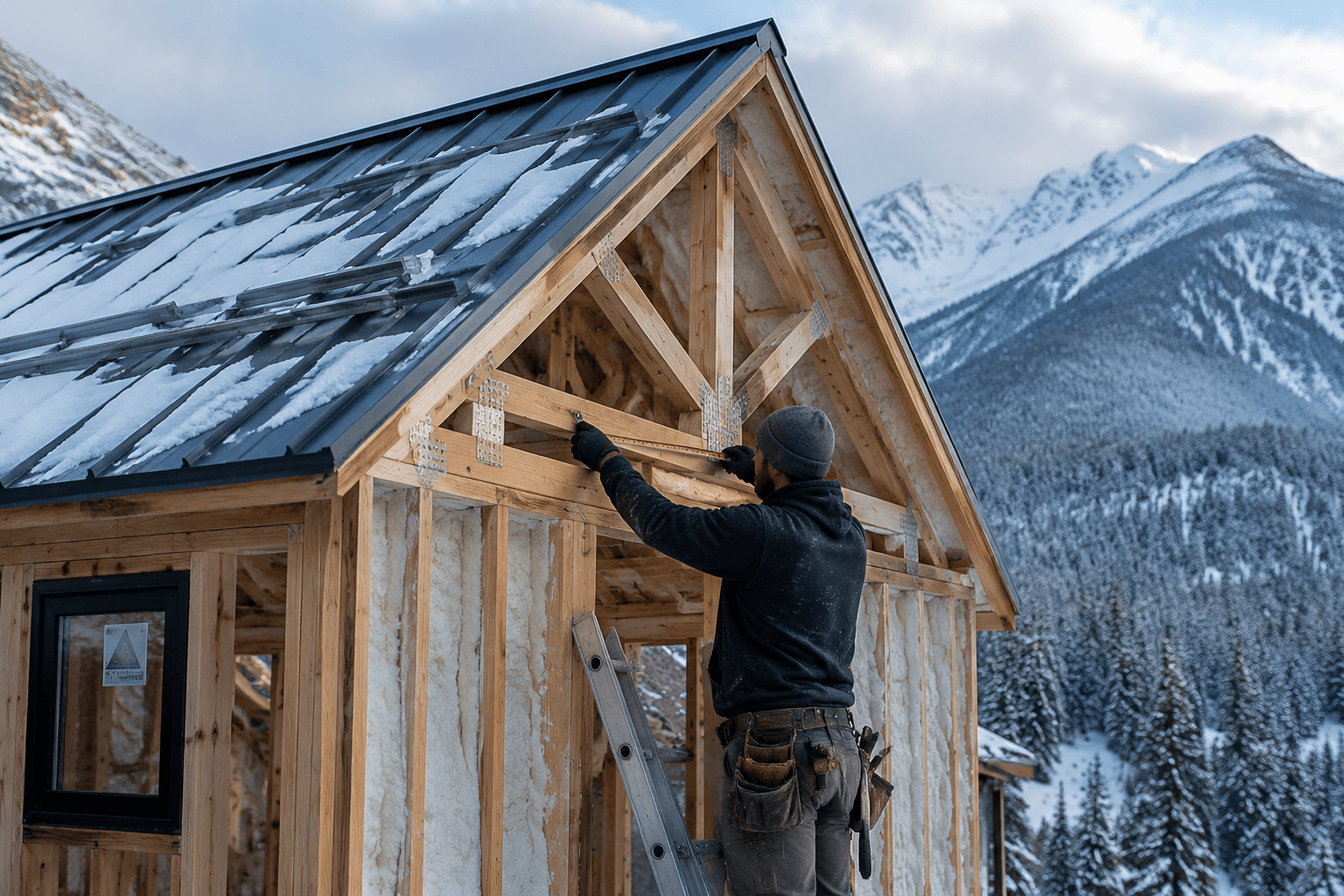
Here's what a snow-ready tiny home in Colorado needs:
Roof Design
- Steep pitch metal roofs are the standard. They shed snow naturally rather than letting it accumulate.
- Roof loads in mountain jurisdictions often range from 40 to 70+ psf (pounds per square foot), depending on elevation. Some ski-resort-adjacent areas go higher.
- Roof framing must be engineered to meet the local ground snow load (GSL) specified in the building code for that parcel.
Insulation and Thermal Performance
- Spray foam insulation is popular in Colorado tiny homes because it seals air leaks and provides high R-value in a thin wall assembly.
- 2×6 wall framing (vs. standard 2×4) gives more room for insulation and is common in mountain builds.
- Triple-pane windows are worth the investment at high elevation — they cut heat loss significantly.
Plumbing and Mechanical
- Heat-traced water lines prevent frozen pipes in extreme cold.
- Interior plumbing runs (keeping pipes inside the thermal envelope) are preferred over exterior walls.
- Insulated skirting is essential for THOWs and homes with exposed undercarriages.
- Gas appliances need to be altitude-adjusted — combustion behaves differently above 8,000 feet.
Wildfire-Interface (WUI) Requirements
If your parcel is in a Wildland-Urban Interface zone — which covers a large portion of Colorado's mountain counties — you'll also need:
- Class A fire-rated roofing material
- Ember-resistant vents
- Non-combustible or ignition-resistant siding within certain setback distances
Colorado-based builders like Rocky Mountain Tiny Houses and Tiny Mountain Homes specifically engineer their builds for these conditions.
Where Are the Best Tiny Home Communities in Colorado?
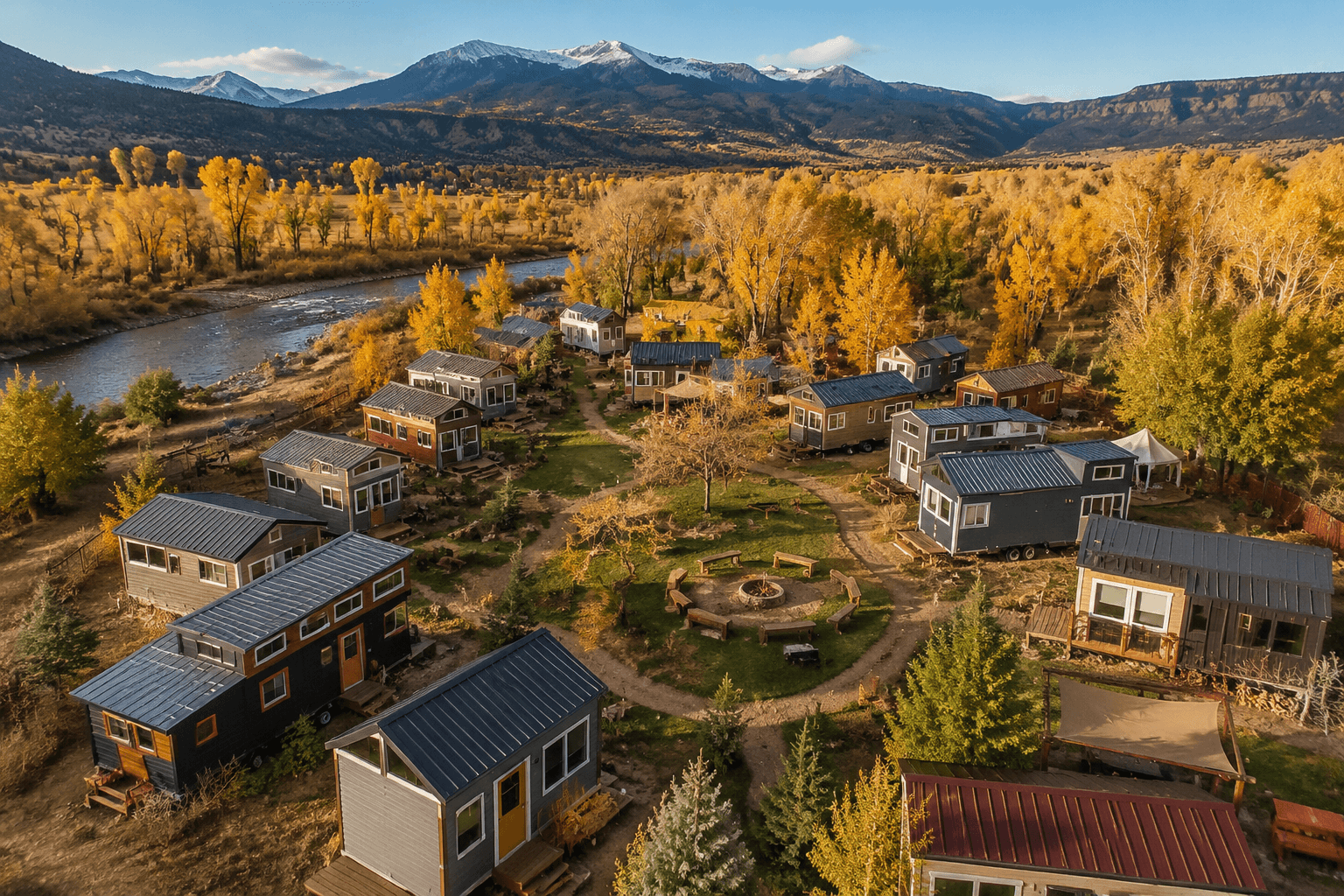
Several established communities make it easier to skip the land-search headache and move into a ready-made tiny home neighborhood. Each has a different vibe and price point.
Escalante Village — Durango
- Riverfront sites near the San Juan Mountains
- Bike- and walk-friendly design with shared green space
- Close to public transit, trails, and downtown Durango
- Strong eco-conscious, community-first culture [1]
River Run Colorado — Near Silt
- Planned neighborhood with landscaped lots
- Shared amenities; positioned as a more affordable Western Slope option
- Good access to outdoor recreation along the Colorado River corridor [1]
MarLin Village — Bayfield
- Colorado's first THOW-specific community
- Designed for tiny houses on wheels as primary residences
- Rural setting near Durango [1]
Wendy's Village — Colorado Springs
- Workforce housing focus; originally designed for local educators
- Shows how tiny home villages are being used to address affordability in high-cost areas [1]
These communities share a few things in common: small footprints, shared amenities, and proximity to outdoor recreation. That's not an accident — it's the model that works in Colorado's market.
What Does Off-Grid Living Look Like for Tiny Homes in Colorado?
Off-grid tiny living is one of the most popular configurations in rural Colorado — and it's very doable with the right setup. Counties like Park, Fremont, and much of the Western Slope have large parcels where full off-grid systems are permitted and practical [2].
A typical off-grid Colorado tiny home setup includes:
- Solar PV with battery storage — sized for year-round use, accounting for shorter winter days at altitude
- Propane or high-efficiency electric heat — mini-splits work well in mild shoulder seasons; propane backup is common for deep winter
- Composting or incinerating toilets — reduces or eliminates the need for a septic system in some counties
- Cistern or well water — well permitting is required in most Colorado counties; cisterns are an option where wells aren't feasible
- High-performance building envelope — tight construction is the foundation of any off-grid energy strategy
One important caveat: Off-grid doesn't mean off-permit. Septic systems, wells, and road access are still regulated, and they're often the gatekeepers for legal year-round residency. A county may allow an off-grid solar setup but still require a permitted septic system before issuing a certificate of occupancy [2].
For builders that specialize in off-grid-ready designs, check out the off-grid ready listings on Tiny Home Sherpa.
How Much Do Tiny Homes in Colorado Cost?
Colorado is not a budget tiny home market. Land scarcity, high construction costs, and strong demand from outdoor lifestyle buyers push prices well above national averages.
Here's a rough breakdown:
| Category | Estimated Cost Range | Notes |
|---|---|---|
| THOW (new, builder-built) | $80,000–$150,000+ | Varies by size, finish, and cold-weather package |
| Foundation tiny home (custom build) | $120,000–$250,000+ | Depends on site prep, utilities, and mountain engineering |
| Tiny home with land (mountain county) | $300,000–$1M+ | Average listing price ~$820K in desirable counties [2] |
| ADU on existing property | $100,000–$200,000 | Front Range cities; depends on existing infrastructure |
| Lot in a tiny home community | $30,000–$100,000+ | Varies widely by community and location |
These are estimates based on current market data and builder pricing. Your actual costs will depend heavily on location, site conditions, and the specific builder you choose.
Choose a foundation build if: You want a permanent address, plan to stay long-term, and want the home to qualify for traditional financing.
Choose a THOW if: You value mobility, want to start at a lower price point, and have a legal place to park it (an RV park, a THOW-friendly community, or private rural land with county approval).
Which Builders Specialize in Colorado Tiny Homes?
Several builders focus specifically on Colorado's climate and regulatory environment. When evaluating a builder, ask about:
- IRC Appendix Q compliance and local permit experience
- Snow load engineering documentation
- Insulation specs (R-values for walls, roof, and floor)
- Experience with WUI requirements
- References from Colorado-based clients
Colorado-focused options worth researching include Rocky Mountain Tiny Houses and Tiny Mountain Homes. For a broader search, the Colorado listings on Tiny Home Sherpa show vetted builders and options specific to the state.
If you're open to comparing mountain-state options, the tiny homes in Alaska guide covers similar cold-weather build considerations for a useful comparison.
FAQ: Tiny Homes in Colorado
Q: Are tiny homes legal in Colorado? Yes. Foundation-built tiny homes under 400 sq ft are legal in most Colorado jurisdictions that have adopted IRC Appendix Q. THOWs are legal in RV parks and some rural zones, but not in standard residential areas.
Q: Can I put a tiny home on rural land in Colorado? Often yes, but it depends on the county. Rural counties like Chaffee, La Plata, and Park are generally more flexible. You'll need to verify zoning, confirm septic/well requirements, and check road access before purchasing land.
Q: What's the minimum square footage for a tiny home in Colorado? There's no single statewide minimum. Under IRC Appendix Q, homes as small as a few hundred square feet can be permitted. Some counties have their own minimums — always check locally.
Q: Do tiny homes in Colorado need to meet snow load requirements? Yes, absolutely. Any permitted structure must meet the local design snow load, which ranges from 40 to 70+ psf in mountain areas. This applies to foundation homes and any structure with a permanent roof.
Q: Can I live off-grid in a Colorado tiny home year-round? Yes, in many rural counties. But you'll still need permitted water (well or cistern) and waste management (septic or approved composting system) for legal year-round residency.
Q: How do I finance a tiny home in Colorado? Foundation tiny homes can qualify for conventional mortgages if they meet minimum size and appraisal requirements. THOWs are typically financed through RV loans or personal loans. Some lenders specialize in tiny home financing — ask your builder for referrals.
Q: What's a THOW? THOW stands for Tiny House on Wheels. It's a tiny home built on a trailer chassis, which makes it mobile but also means it's often classified as an RV for zoning and financing purposes.
Q: Is Colorado a good state for eco-friendly tiny living? Yes. The combination of strong solar resources, access to rural land, supportive rural county zoning, and a culture that values outdoor and sustainable living makes Colorado one of the better states for eco-conscious tiny home buyers.
Q: What are the best counties for tiny homes in Colorado? Chaffee County, La Plata County, and Gunnison County are frequently cited as relatively friendly jurisdictions. Park County and Fremont County are popular for off-grid rural setups.
Q: How do I find a vetted tiny home builder in Colorado? Start with the Colorado listings on Tiny Home Sherpa for a directory of builders with Colorado-specific experience.
For a complete overview of all states, visit our Tiny Homes by State directory to compare zoning, costs, and builder options across the country.
Conclusion: Your Next Step Toward Mountain Tiny Living
Tiny homes in Colorado aren't a fringe idea anymore. They're a real, practical path to mountain living — whether you're drawn by the skiing, the solitude, the sustainability angle, or just the desire to own something you can actually afford to maintain.
The challenges are real too. Snow loads, WUI requirements, patchwork zoning, and high land prices mean you need to go in with clear eyes. But none of those challenges are deal-breakers with the right information and the right builder.
Here's a simple path forward:
- Decide on your structure type. Foundation home or THOW? That single decision shapes everything else — zoning options, financing, and builder choices.
- Pick a target county or region. Research the planning department's stance on tiny homes before you fall in love with a specific parcel.
- Set a realistic budget. Include land, site prep, utilities, and permits — not just the home itself.
- Find a builder with Colorado experience. Ask for snow load documentation and local permit references.
- Explore community options. If land-hunting feels overwhelming, an established community like Escalante Village or River Run Colorado might be the right starting point.
Start where you are. You don't need to have every answer before you take the next step — you just need a reliable guide.
Browse the full tiny homes by state directory to compare Colorado with other mountain and western states, or go straight to the Colorado builder listings to start finding your fit.
Small footprint. Full life. Colorado has the terrain for both.
Looking for a builder in Colorado? Rocky Mountain Tiny Houses in Durango and Land Ark RV specialize in high-altitude builds suited to Colorado's mountain climate.
References
[1] Tiny Homes For Sale In Co - https://www.zookcabins.com/service-areas/colorado/tiny-homes-for-sale-in-co
[2] Colorado - https://www.landsearch.com/tiny-home/colorado
[3] Tiny Homes For Sale In Colorado - https://tiny-homesusa.com/tiny-homes-for-sale-in-colorado/
[5] Colorado - https://tinyhouselistings.com/countries/united-states/states/colorado
[6] Colorado - https://greatlakestinyhome.com/locations/colorado/
[7] Tiny Homes For Sale - https://www.houzeo.com/homes-for-sale/colorado/tiny-homes-for-sale
[10] coloradotinyhomes - https://coloradotinyhomes.com