
Last updated: May 15, 2026
Quick Answer: Tiny homes in Alaska are a real, viable option for off-grid buyers and adventure-focused homeowners — but they require serious planning around insulation, heating systems, and local zoning rules. The state's wide-open land and flexible rural regulations make it one of the more permissive places for off-grid tiny living, while cities like Anchorage are actively creating new pathways for small dwellings. The biggest factors to nail down first are your build type (foundation vs. wheels), your borough's specific rules, and your energy strategy.
Key Takeaways
- Alaska allows tiny homes, but regulations vary significantly by borough — rural areas are far more flexible than cities.
- Foundation-built tiny homes must meet the International Residential Code (IRC); tiny homes on wheels (THOWs) face more variable rules depending on location. [2]
- Anchorage launched free preapproved ADU designs in March 2026, making it easier and cheaper to build a small dwelling on existing residential lots. [1]
- Mat-Su Borough and the Kenai Peninsula are among the most permissive areas for tiny home placement and off-grid builds. [2]
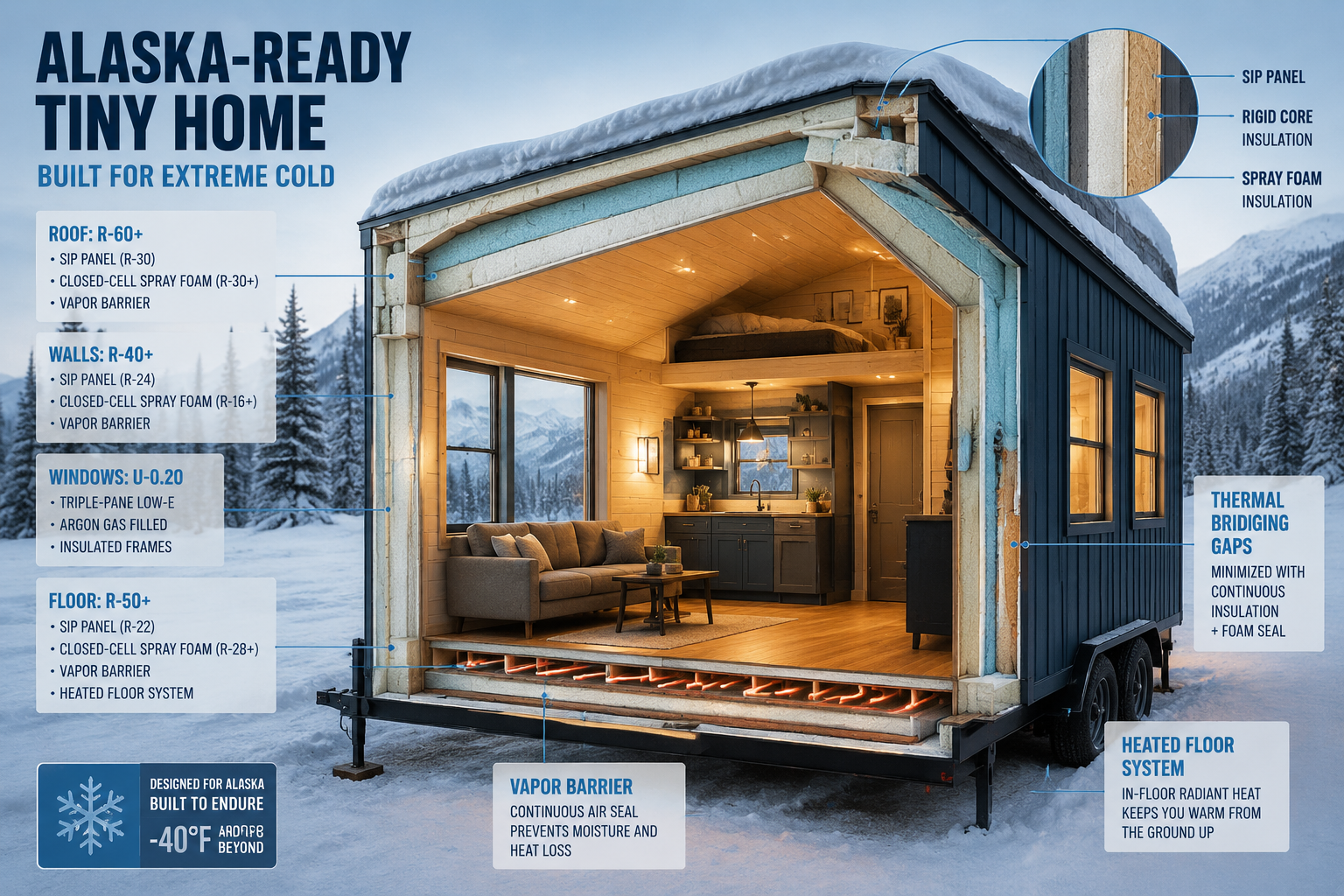
- Insulation is non-negotiable in Alaska — most cold-climate builds use SIP panels (structural insulated panels) or spray foam with R-values well above standard residential minimums.
- Off-grid energy systems typically combine solar, propane, and battery storage to handle Alaska's extreme seasonal light variation.
- Builders like Great Lakes Tiny Home offer RVIA-certified models designed specifically for Alaska's climate demands. [9]
- Costs are lower than traditional housing, with reduced monthly expenses, less maintenance, and a smaller environmental footprint. [3]
What Makes Tiny Homes in Alaska Different From Other States?
Alaska isn't just cold — it's a different category of cold. Temperatures in interior Alaska can drop to -50°F. That changes everything about how a tiny home needs to be built.
Most tiny home guides written for the Lower 48 don't account for:
- Permafrost, which can shift foundations and damage plumbing
- Extreme seasonal light variation (nearly 24-hour darkness in winter, nearly 24-hour daylight in summer)
- Heavy snow loads that standard roof designs can't handle
- Remote access challenges — many Alaskan properties are miles from the nearest paved road
A tiny home built for a mild Pacific Northwest winter will not survive an Alaskan one without significant upgrades. This guide covers what those upgrades look like and how to plan for them.
How Does Insulation Work for Cold-Climate Tiny Homes in Alaska?
Good insulation is the single most important factor in an Alaska-ready tiny home. Without it, heating costs will be enormous — and in a remote location, running out of fuel is a genuine safety risk.
The two most common approaches:
SIP Panels (Structural Insulated Panels): These are prefabricated wall and roof panels with a foam core sandwiched between two rigid boards. They offer high R-values (a measure of thermal resistance) with minimal thickness — important when every inch of interior space counts. A 6.5-inch SIP wall typically achieves around R-27.
Spray Foam Insulation: Applied in place, spray foam seals every gap and crack while adding insulation value. Closed-cell spray foam is the preferred type for Alaska because it also acts as a vapor barrier, which is critical in cold climates where moisture can condense inside walls and cause rot or mold.
What R-values do you actually need in Alaska?
| Building Component | Lower 48 Typical | Alaska Recommended |
|---|---|---|
| Walls | R-13 to R-21 | R-30 to R-40 |
| Roof/Ceiling | R-38 | R-60 or higher |
| Floor | R-19 | R-30 to R-40 |
| Windows | Double-pane | Triple-pane, low-e |
Common mistake: Underinsulating the floor. In a tiny home on a foundation, cold ground pulls heat downward fast. In a THOW (tiny home on wheels), the undercarriage is fully exposed to outside air. Skimping on floor insulation is one of the most common and costly errors in cold-climate tiny builds.
Also plan for a vapor barrier on the warm side of your insulation. In Alaska's climate, moisture management is just as important as heat retention.
What Are the Zoning and Legal Rules for Tiny Homes in Alaska?
Alaska's rules depend heavily on where you want to place your home. The state doesn't have a single unified tiny home law — it's handled borough by borough. [2]
Two main categories of tiny homes under Alaska law: [2]
- Foundation-built tiny homes — treated as permanent dwellings, subject to full IRC building codes and typically requiring utility connections.
- THOWs (Tiny Homes on Wheels) — regulated more like RVs, with placement restrictions that vary by borough.
Borough-by-borough breakdown:
- Anchorage: THOWs are generally restricted to licensed RV parks or short-term stays. Permanent small dwellings must meet IRC standards. However, Anchorage launched a free preapproved ADU design program in March 2026, which significantly lowers the barrier for building a legal small home on an existing residential lot. [1]
- Mat-Su Borough: More permissive, especially outside community zoning districts. Tiny homes and dry cabins are commonly permitted. [2]
- Kenai Peninsula Borough: Minimal zoning restrictions outside city limits, making it one of the most favorable areas for tiny home placement and off-grid builds. [2]
- Rural/unorganized boroughs: Often have very few restrictions, but you'll need to plan independently for water, waste, and road access. [2]
Decision rule: If you want to go off-grid on rural land, Mat-Su or Kenai Peninsula are your most straightforward options. If you want to be near Anchorage, look into the new ADU preapproval program — it's a legitimate shortcut through the permitting process.
For a broader look at how Alaska compares to other states, the Tiny Homes by State directory is a good starting point.
What Off-Grid Energy Systems Work Best in Alaska?
Alaska's energy situation is unique. In summer, you may have 20+ hours of daylight. In winter, some locations get only 4-5 hours of usable sunlight per day. Any off-grid energy plan needs to account for both extremes.
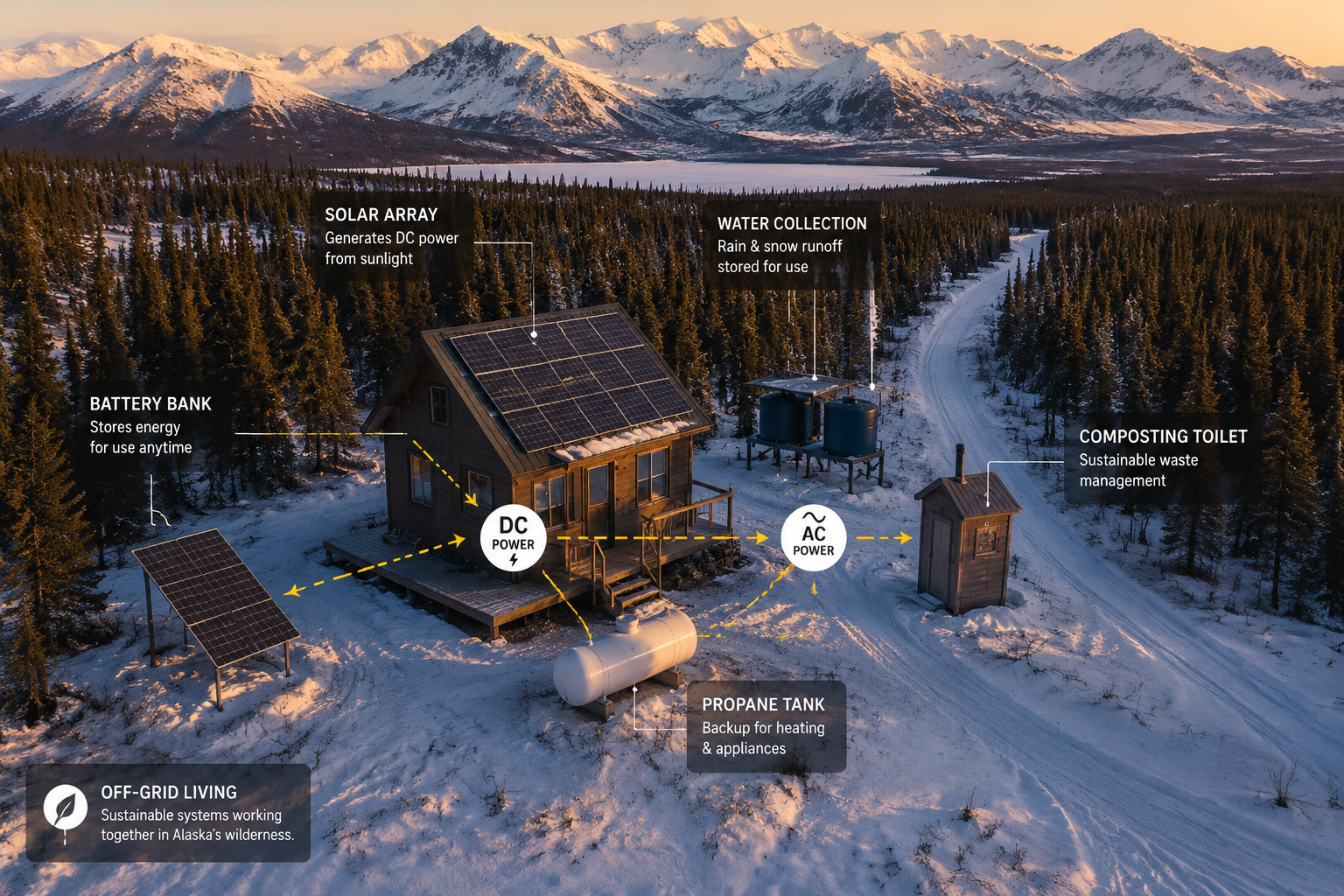
The most practical off-grid energy combination for Alaska tiny homes:
Solar + Battery Storage: South-facing solar panels with a quality lithium battery bank handle summer power needs well. In winter, output drops significantly — so solar alone is rarely enough year-round in Alaska.
Propane: Propane is the backbone of most Alaska off-grid setups. It powers heating, cooking, and water heating reliably in cold temperatures (unlike some other fuels that gel in extreme cold). Plan for a large enough tank to last through winter supply disruptions.
Wood or Pellet Stove: A secondary heat source is essential for safety. If your propane runs out or your primary heater fails at -30°F, you need a backup. A small wood stove or pellet stove serves this role well in a tiny home.
Wind Micro-Turbines: In exposed or coastal locations, small wind turbines can supplement solar during dark winter months when wind is more consistent.
Water systems in freezing temperatures:
- Use heat tape on exposed pipes
- Install a recirculating pump to keep water moving (moving water is harder to freeze)
- Consider a buried cistern below the frost line for water storage
- Plan for a composting toilet if you're truly off-grid — it eliminates the need for a septic system in remote areas
Where Can You Actually Place a Tiny Home in Alaska?
Placement is one of the most practical questions for tiny home buyers in Alaska, and the answer depends on your home type and your tolerance for remoteness. [2]
Option 1: Urban lots with ADU approval (Anchorage) Anchorage's new preapproved ADU designs make it possible to add a small dwelling to an existing residential lot. The first design released in March 2026 is an 800-square-foot open-concept unit over a two-car garage, with smaller and more affordable options planned for summer 2026. [1] The program includes a permitting checklist with cost projections — a real time-saver.
Option 2: Rural land in permissive boroughs Mat-Su and Kenai Peninsula offer the most flexibility. Outside community zoning districts, you can often build a dry cabin or tiny home without full utility hookups. You'll need to plan for:
- A well or water delivery
- A composting toilet or septic system
- A reliable access road (or snowmobile access in winter)
- Emergency services planning — response times in remote Alaska can be very long
Option 3: THOW in a licensed RV park In Anchorage and other cities, a tiny home on wheels can legally stay in a licensed RV park. This is a lower-commitment option if you're not ready to buy land.
Option 4: Remote off-grid homestead For the most adventurous buyers, Alaska's vast unorganized boroughs offer land with minimal regulation. This is the "small footprint, full life" option — but it demands serious self-sufficiency planning.
What Does It Cost to Build or Buy a Tiny Home in Alaska?
Costs in Alaska run higher than the national average due to shipping distances, material costs, and the need for cold-climate upgrades. That said, tiny homes still cost far less than conventional Alaskan housing. [3]
General cost ranges (2026 estimates):
| Build Type | Estimated Cost Range |
|---|---|
| DIY tiny home on wheels | $30,000 – $70,000 |
| Custom THOW from builder | $80,000 – $150,000+ |
| Foundation tiny home (rural) | $100,000 – $200,000+ |
| ADU on existing Anchorage lot | $150,000 – $300,000+ |
These are rough estimates. Actual costs depend on size, materials, energy systems, and site prep. Remote locations add significant cost for access road construction and utility setup.
Where builders fit in: Several builders work with Alaska buyers. Great Lakes Tiny Home offers RVIA-certified custom builds designed with quality materials suited to demanding climates. [9] For those exploring a range of builders, the Tiny Home Builders directory is a practical place to compare options. Builders like Homestead Tiny House Co. and Migration Tiny Homes also offer custom builds worth exploring for cold-climate applications.
THOW vs. Foundation: Which Is Right for Alaska?
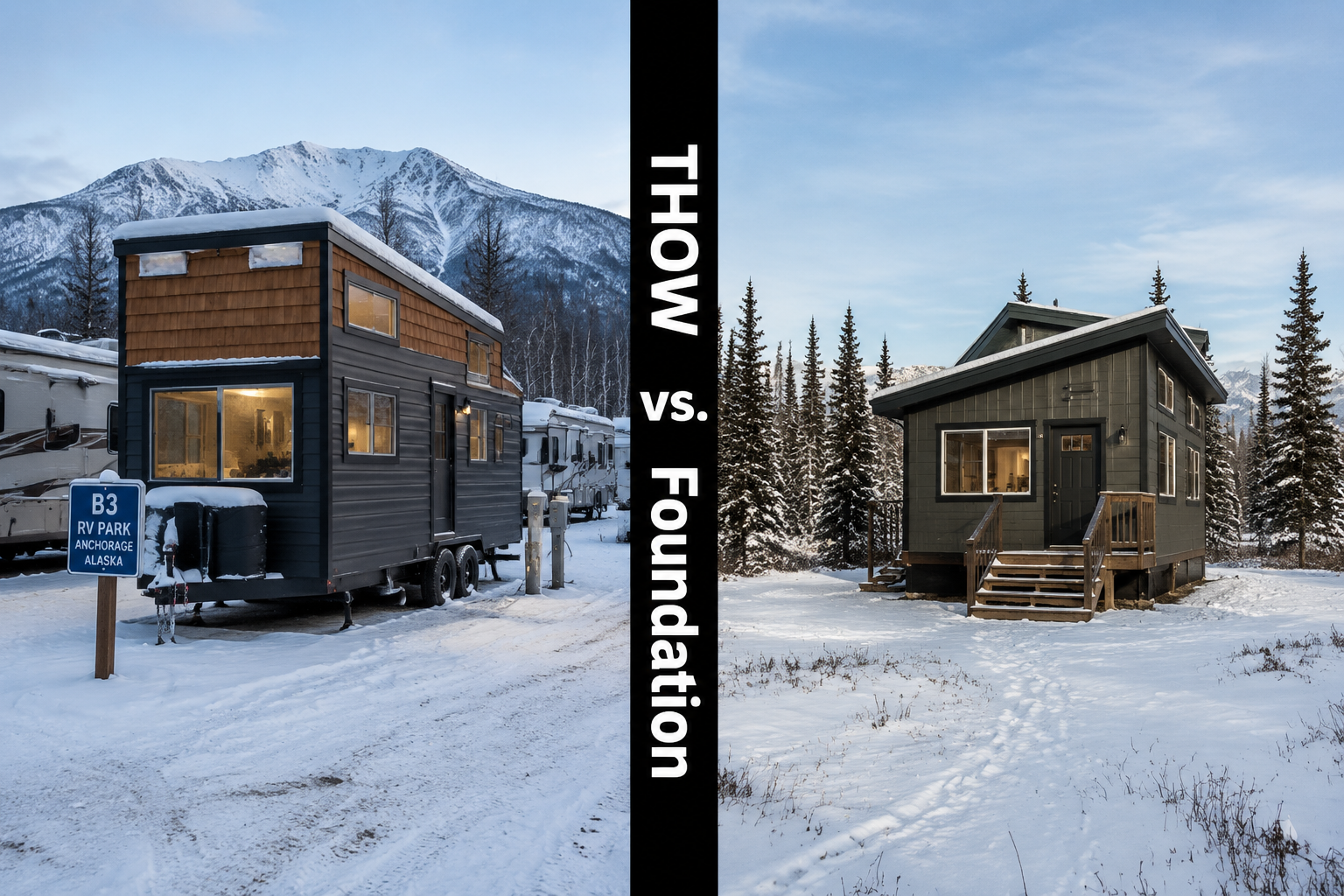
This is the most common decision point for Alaska tiny home buyers. Both options work — but they serve different goals. [2]
Choose a THOW if:
- You want flexibility to move the home
- You're not ready to commit to a specific piece of land
- You plan to stay in an RV park or on private land with permission
- You want a lower upfront cost
Choose a foundation build if:
- You own land and plan to stay
- You want a more permanent, code-compliant dwelling
- You need full utility connections
- You want to build equity in a fixed structure
Edge case: In areas with permafrost, even foundation homes require special engineering — typically pilings driven below the frost line, or a design that allows air to circulate under the structure to prevent permafrost thaw. This adds cost but is non-negotiable in affected areas.
If you're drawn to the off-grid lifestyle and want to explore builders who specialize in rugged, remote-ready builds, check out Free Range Tiny Homes and Tundra Tiny Houses — both worth a look for Alaska-style applications.
Frequently Asked Questions
Are tiny homes legal in Alaska? Yes. Alaska allows tiny homes, but rules vary by borough. Foundation homes must meet IRC building codes. THOWs are regulated more like RVs and face placement restrictions in cities. Rural areas are generally more permissive. [2]
What is the minimum size for a tiny home in Alaska? There's no single statewide minimum. Anchorage follows IRC standards, which typically require at least 120 square feet of habitable space. Rural boroughs may have no minimum at all. [10]
Can I live off-grid in a tiny home in Alaska? Yes, especially in rural areas outside city limits. Many boroughs allow dry cabins and off-grid builds without full utility hookups. You'll need to plan independently for water, waste, and heat. [2]
What heating system is best for an Alaska tiny home? Propane is the most reliable primary heat source for off-grid Alaska tiny homes. Pair it with a wood or pellet stove as a backup. Radiant floor heating is an excellent secondary system for comfort.
Does Anchorage allow tiny homes? Anchorage allows permanent small dwellings that meet IRC standards and ADU regulations. THOWs are restricted to RV parks. The city launched a free preapproved ADU design program in March 2026 to make small home construction easier. [1]
What insulation is best for a tiny home in Alaska? Closed-cell spray foam and SIP panels are the top choices. Both provide high R-values with minimal thickness and include vapor barrier properties critical in cold climates.
How do I handle water in a remote Alaska tiny home? Options include a drilled well, water delivery to a buried cistern, or rainwater collection. Use heat tape on pipes, a recirculating pump, and plan for a composting toilet to avoid complex septic requirements.
Can I get a tiny home delivered to Alaska? Yes. Some builders ship or deliver to Alaska, though costs are higher. RVIA-certified THOWs can be transported by truck or barge depending on location. [9]
What is a dry cabin in Alaska? A dry cabin is a structure without running water — common in rural Alaska. Many tiny home builds in remote areas start as dry cabins and add water systems over time.
Is solar power enough for an Alaska tiny home? Solar works well in summer but is insufficient alone in winter due to limited daylight hours. Most Alaska off-grid systems combine solar with propane and battery storage.
What are the Mat-Su Borough rules for tiny homes? Mat-Su Borough permits tiny homes and dry cabins, particularly outside community zoning districts. It's one of the more flexible boroughs in the state for small and off-grid builds. [2]
How much does a tiny home cost in Alaska? Costs range from around $30,000 for a DIY THOW to $300,000+ for a fully permitted ADU in Anchorage. Cold-climate upgrades, remote site prep, and shipping add to costs compared to the Lower 48. [3]
Conclusion: Start Where You Are
Tiny homes in Alaska aren't a compromise — for the right person, they're the best possible fit. Lower housing costs, a smaller footprint, and the freedom to live in some of the most stunning landscapes on earth. But Alaska demands more from a tiny home than almost any other environment. The insulation has to be right. The energy system has to be reliable. The placement has to be legal and livable.
The good news: all of these things are figured-outable. The zoning landscape is opening up, especially in Anchorage. Builders are designing specifically for cold climates. And the off-grid technology available in 2026 is genuinely capable of handling an Alaskan winter.
Your next steps:
- Decide on your build type — THOW or foundation — based on your land situation and long-term plans.
- Research your specific borough's rules before buying land or a home. Mat-Su and Kenai Peninsula are the most flexible starting points.
- Get your insulation and heating plan in place first — these are the non-negotiables.
- Browse vetted builders who have experience with cold-climate or off-grid builds. The Tiny Homes by State directory is a solid place to map your options.
- If you're near Anchorage, look into the new preapproved ADU program — it could save you months of permitting time and real money on design costs.
Start where you are. Alaska's tiny home path is rugged, but it's well worth the climb.
References
[1] Anchorage Develops Preapproved Designs For Tiny Homes And Other Adus - https://alaskapublic.org/news/anchorage/2026-03-12/anchorage-develops-preapproved-designs-for-tiny-homes-and-other-adus
[2] Where Can You Legally Put A Tiny Home In Alaska - https://www.stittak.com/blog/where-can-you-legally-put-a-tiny-home-in-alaska
[3] Tiny Home Living - https://glaciernalu.com/tiny-home-living/
[5] Best Tiny Homebuilders In Alaska - https://www.newhomesource.com/learn/best-tiny-homebuilders-in-alaska/
[6] Anchorage Is Getting Ready Open Village Tiny Houses People Experiencing Homelessness - https://www.alaskasnewssource.com/2025/11/15/anchorage-is-getting-ready-open-village-tiny-houses-people-experiencing-homelessness/
[9] Alaska - https://greatlakestinyhome.com/locations/alaska/
[10] Alaska Tiny House Laws - https://tinyhomestate.com/alaska-tiny-house-laws/